What is the Pacific NorthWest Economic Region? (PNWER) and what are its connections to big oil?
By Sasha Izard
May 28, 2026
————————————————————————————————–
Last week, I wrote the following article:
In 2020, Saanich made a “5 year membership agreement” for close to a million dollars to the South Island Prosperity Partnership (SIPP). This is what it was to get in return. – CRD Watch Homepage
————————————————————————————————–
I’d like to shine a spotlight on one of the South Island Prosperity Partnership’s members: The Pacific Northwest Economic Region. (PNWER)
Two years ago, I wrote an Open Letter to SIPP. In the letter, I asked them the following question:
“SIPP’s membership includes an international lobby for many of the biggest fossil fuel companies in North America, if not the world, known as the Pacific NorthWest Economic Region, which has a so-called Energy Institute. How does SIPP reconcile that with its oft claimed dedication to climate protection?”
I also asked the following questions:
“I understand that SIPP recently created COAST and the IPC and that significant government funds are headed in those directions. Does SIPP need to remain a middle organization?”
“Will COAST’s activities, including R&D, in any way help to facilitate future offshore oil and gas exploration/extraction and/or global shipping of oil, gas and/or forestry products?”
An Open Letter to the South Island Prosperity Partnership – Sasha Izard
The organization that has received millions of dollars of public funding did not respond to letter.
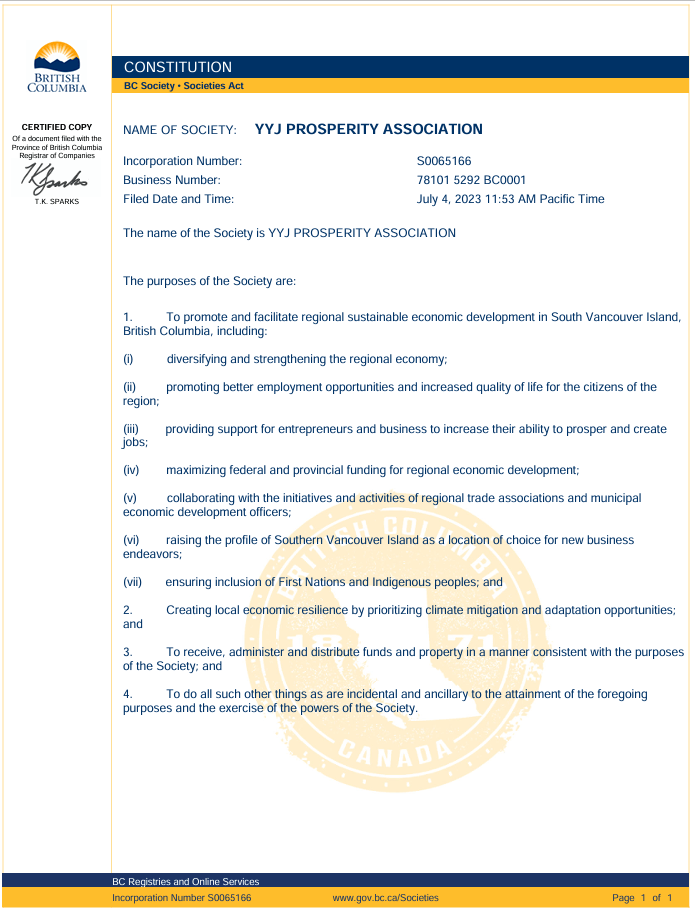
The South Island Prosperity Partnership is the business of the YYJ Prosperity Association. In the Constitution of the YYJ Prosperity Association (See Appendix A. at the end of this article), among the stated purposes of the organization, it is written:
“2. Creating local economic resilience by prioritizing climate mitigation and adaptation opportunities;
and
3. To receive, administer and distribute funds and property in a manner consistent with the purposes of the Society”

The question is then, how could SIPP receive money from an organization that serves the interests of its members involved in big oil?
SIPP has an FAQ page on its website. At the time of writing the FAQ states:
20. What are the benefits of SIPP membership?
Through SIPP, our members connect to an influential network of business, government, and community leaders who make the region’s economy more resilient, innovative, sustainable and equitable.
By taking a seat at the region’s economic development table, SIPP members can:
expand their networks through valuable peer-to-peer connections at exclusive events like our Executive Leadership Roundtables and the Local Leadership Forum
amplify their brands through SIPP’s extensive digital platforms and communications networks and enjoy preferential status at events such as the Rising Economy Conference
add their perspectives on shaping the region’s economy by participating in SIPP’s task forces, working groups and roundtables.
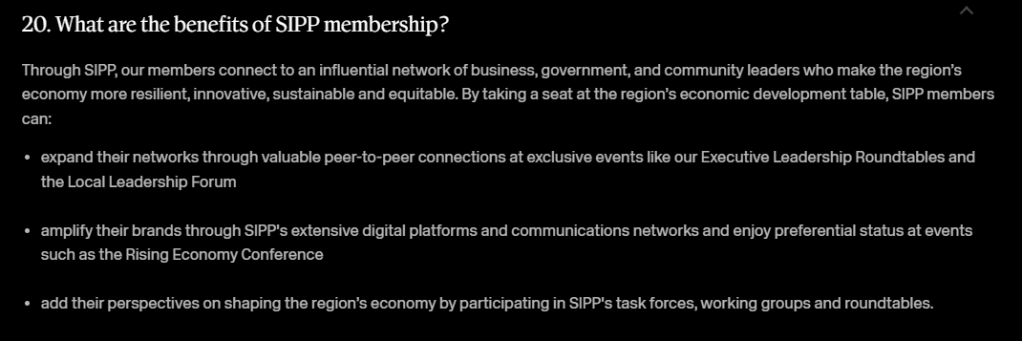
In other words, SIPP, much like the UDI lobby which it shares membership with, offers influence to its paying corporate member organizations.
As in the article last week, I pointed out that SIPP was intended from the beginning to be an industry-led organization, one that feeds off of public funding.
The following is a screenshot from the South Island Prosperity Partnership’s members page at the time of writing:
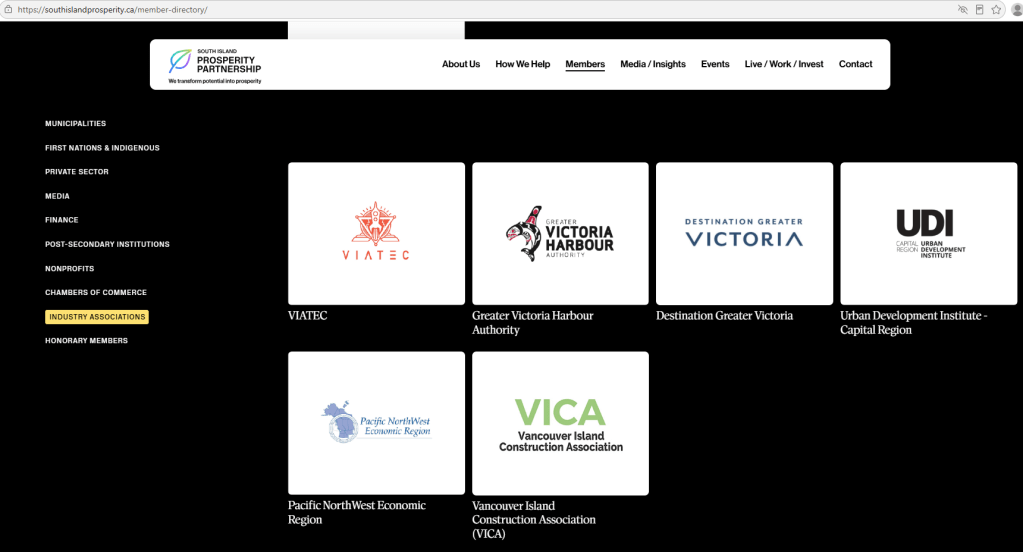
(Archived snapshot): Member Directory – South Island Prosperity Partnership
As you will notice following the UDI Capital Region’s logo, is the following SIPP member:
By clicking on that link, the following appears on SIPP’s website:
“The Pacific NorthWest Economic Region (PNWER) is a statutory public/private non-profit created in 1991 by the states of Alaska, Idaho, Oregon, Montana, Washington, and the Canadian provinces of British Columbia, Alberta, Saskatchewan, and the Yukon and Northwest Territories. PNWER’s goal is to increase the economic well-being and quality of life for all citizens of the region, while maintaining and enhancing our natural environment.”
The organization according to its website is based in the United States, in Seattle, Washington State:

The organization’s website states at top:
PNWER – Pacific NorthWest Economic Region
“Pacific NorthWest Economic Region
”The gold standard of U.S. – Canada relations”
– Hon. David Wilkins, Former U.S. Ambassador to Canada“
According to the Wikipedia bio for Wilkins at the time of writing:
“David Horton Wilkins (born October 12, 1946) is an American attorney and a former United States Ambassador to Canada during the administration of President George W. Bush.”
David H. Wilkins – Wikipedia
The organization also states:
“PNWER’s mission is to increase the economic well-being and quality of life for all citizens of the region, while maintaining and enhancing our natural environment.“
Although it’s not apparent how it does that with a vast representation of Big Oil, as well as resource extraction/consumption companies, as well as forestry companies among its paying membership and sponsors.
—————————————————————————————————
Members of the Pacific NorthWest Economic Region connected to the oil/fossil fuel industry:
The full membership list of the PNWER at the time of writing can be viewed in Appendix B at the end of this article.
Members of the PNWER connected to the oil/fossil fuel industry (I’ve highlighted some of the big oil/fossil fuel names)
American Petroleum Institute
Andeavor
Atco
Avista
BHP Billiton
BP
Canadian Association of Petroleum Producers
Calumet Montana Refining
CAPP
Cenovus Energy
Cloud Peak Energy
Denbury
Devon Canada
Enbridge
Enmax
ExxonMobil
Federated Co-operatives Limited
FortisBC
Imperial
Jordan Cove LNG
Koch Industries Inc.
Lighthouse Resources Inc.
MDU Resources
Portland General Electric
NorthWestern Energy
NW Natural
PPL Montana
Puget Sound Energy
Shell
Teck
Transalta
TransCanada
Veresen
Members Indirectly connected to the fossil fuel industry:
Alaska Airlines
Calgary Airport Authority
Cruise Line International Association
BNSF Railway
Cement Association of Canada
Government of Alberta
Idaho Power
Nutrien
Northwest Cement Council
Oregon Concrete and Aggregate Producers Association
Port of Vancouver
The Washington Companies
Union Pacific
(Note: This list is incomplete, as numerous other member organizations are indirectly tied to the fossil fuel industry)
Various forestry companies are also included among the membership.
—————————————————————————————————
The organization’s sponsors:
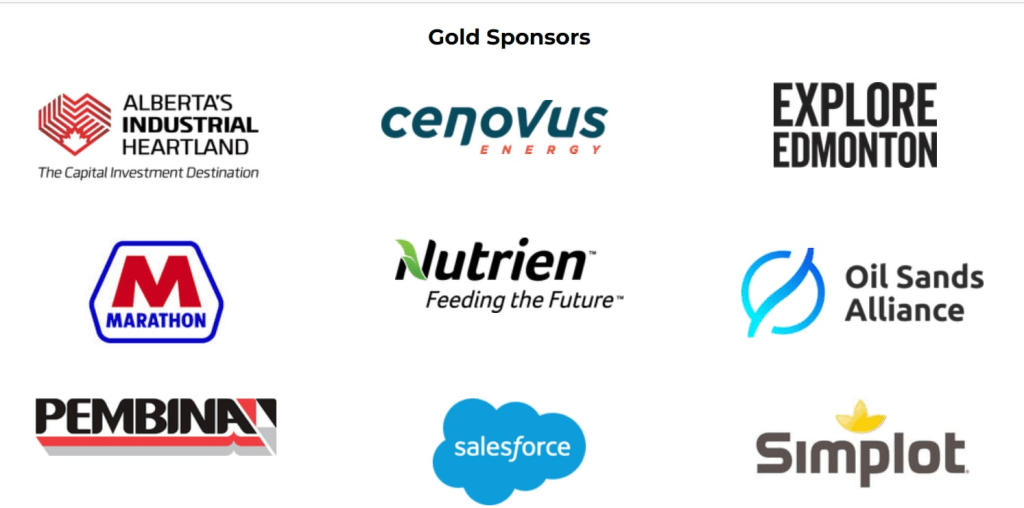
The following is a list of sponsors of the PNWER from their website at the time of writing.
Current PNWER Sponsors – PNWER
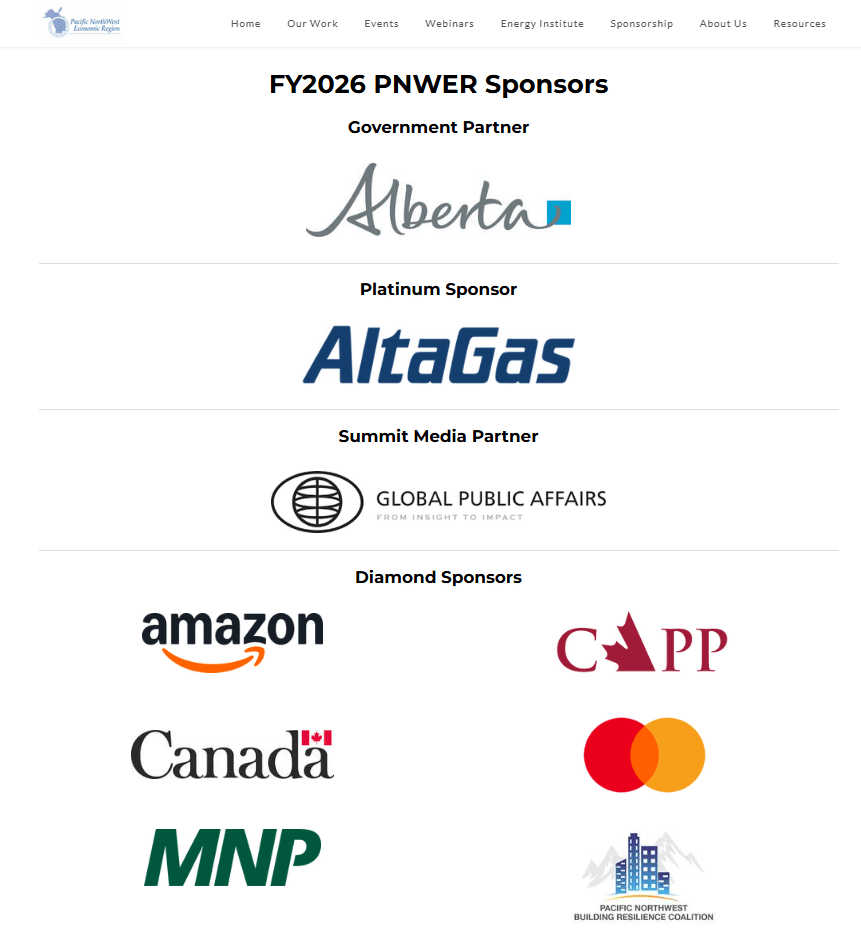

Note: Digital is the Digital Supercluster a similar type of organization: DIGITAL – Building Canadian Prosperity
—————————————————————————————————
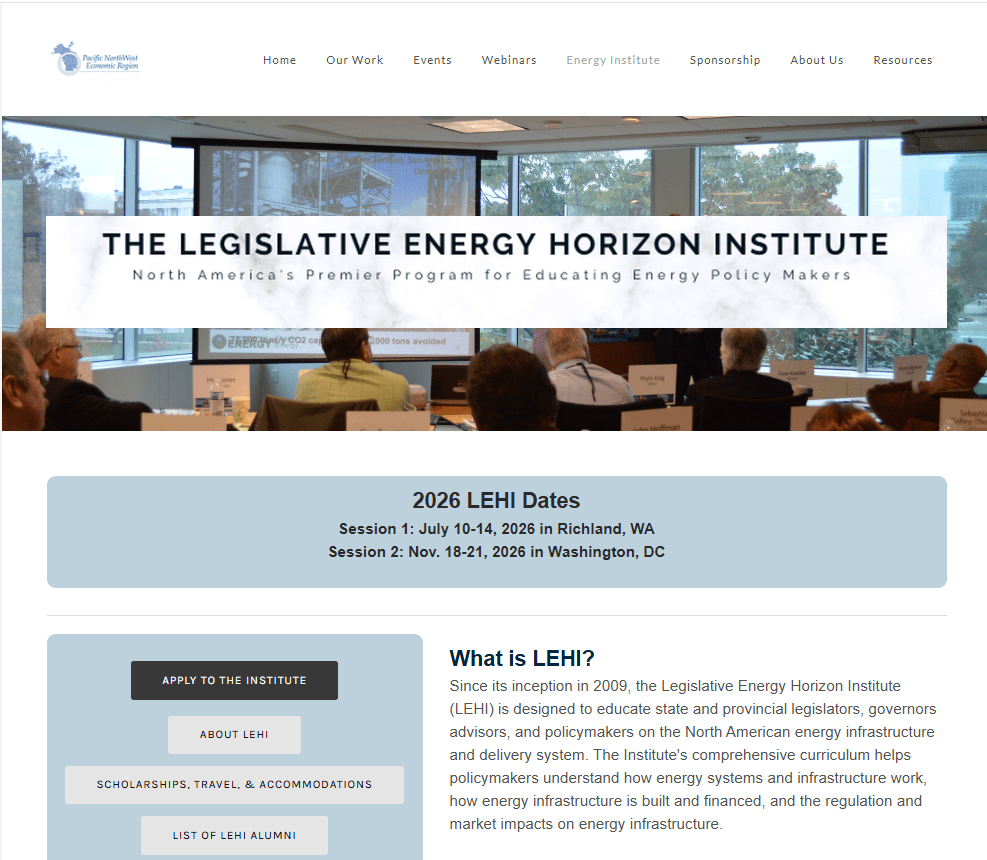
What is LEHI?
The presence of big oil sponsoring LEHI as seen above, provides a clue.
LEHI is the Legislative Energy Horizon Institute, part of the Pacific NorthWest Economic Region (PNWER).
Legislative Energy Horizon Institute – PNWER
Archived version: Legislative Energy Horizon Institute – PNWER
Yes, it’s yet another ‘institute’ that represents industry that just happens to be there to educate politicians etc., and is heavily subsidized by government. Sound familiar?
“The Legislative Horizon Institute North America’s Premier Program for Educating Energy Policy Makers”
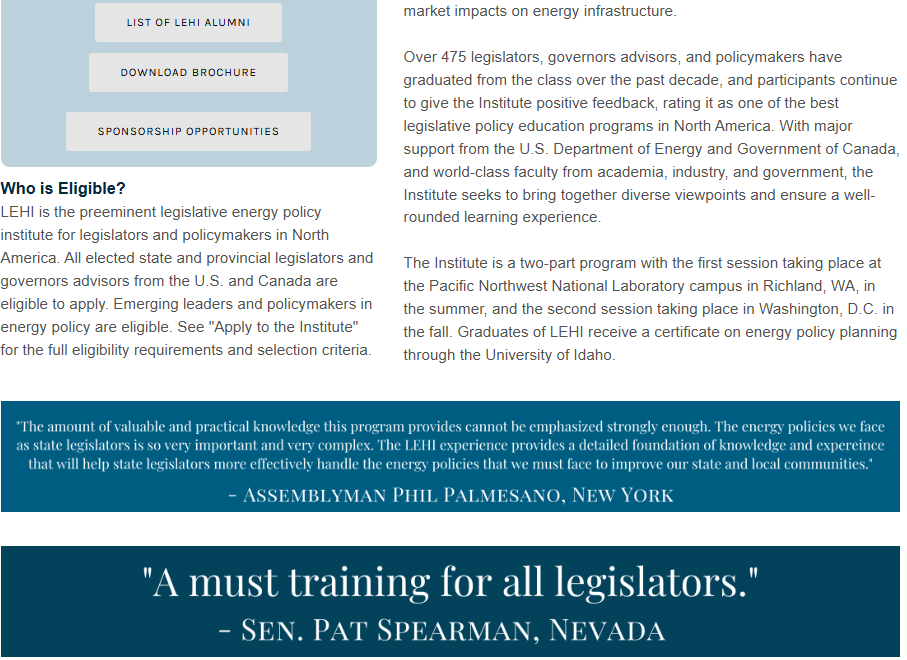
“Who is Eligible?
LEHI is the preeminent legislative energy policy institute for legislators and policymakers in North America. All elected state and provincial legislators and governors advisors from the U.S. and Canada are eligible to apply. Emerging leaders and policymakers in energy policy are eligible. See “Apply to the Institute” for the full eligibility requirements and selection criteria.”
“What is LEHI?
Since its inception in 2009, the Legislative Energy Horizon Institute (LEHI) is designed to educate state and provincial legislators, governors advisors, and policymakers on the North American energy infrastructure and delivery system. The Institute’s comprehensive curriculum helps policymakers understand how energy systems and infrastructure work, how energy infrastructure is built and financed, and the regulation and market impacts on energy infrastructure.
Over 475 legislators, governors advisors, and policymakers have graduated from the class over the past decade, and participants continue to give the Institute positive feedback, rating it as one of the best legislative policy education programs in North America. With major support from the U.S. Department of Energy and Government of Canada, and world-class faculty from academia, industry, and government, the Institute seeks to bring together diverse viewpoints and ensure a well-rounded learning experience.
The Institute is a two-part program with the first session taking place at the Pacific Northwest National Laboratory campus in Richland, WA, in the summer, and the second session taking place in Washington, D.C. in the fall. Graduates of LEHI receive a certificate on energy policy planning through the University of Idaho. “
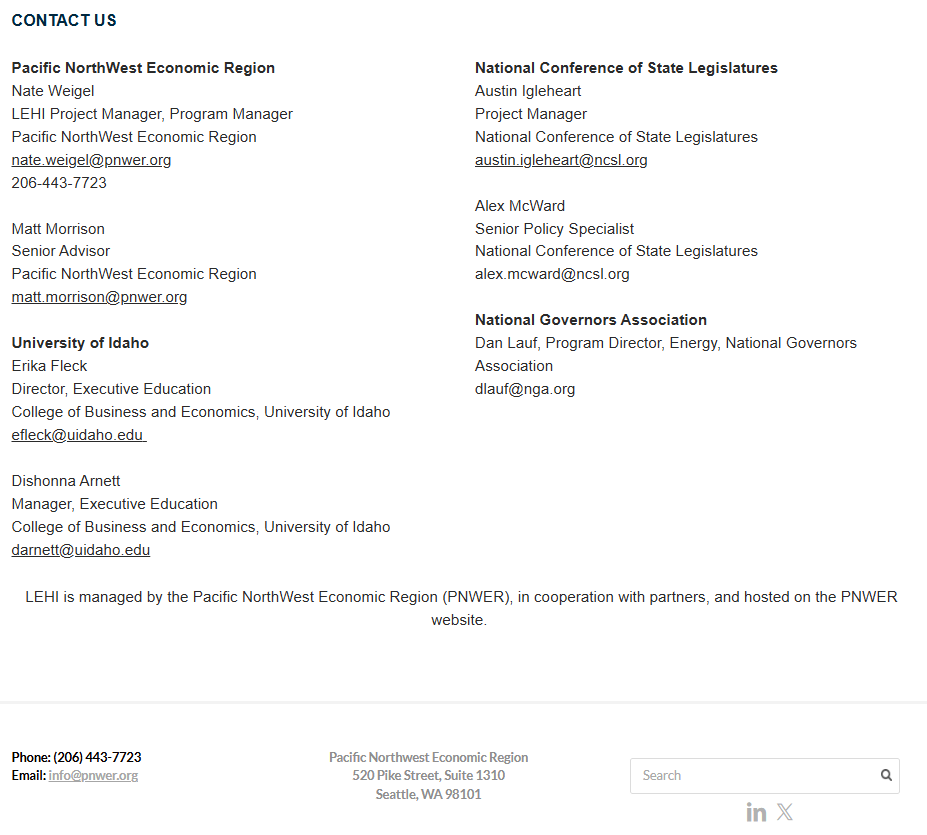
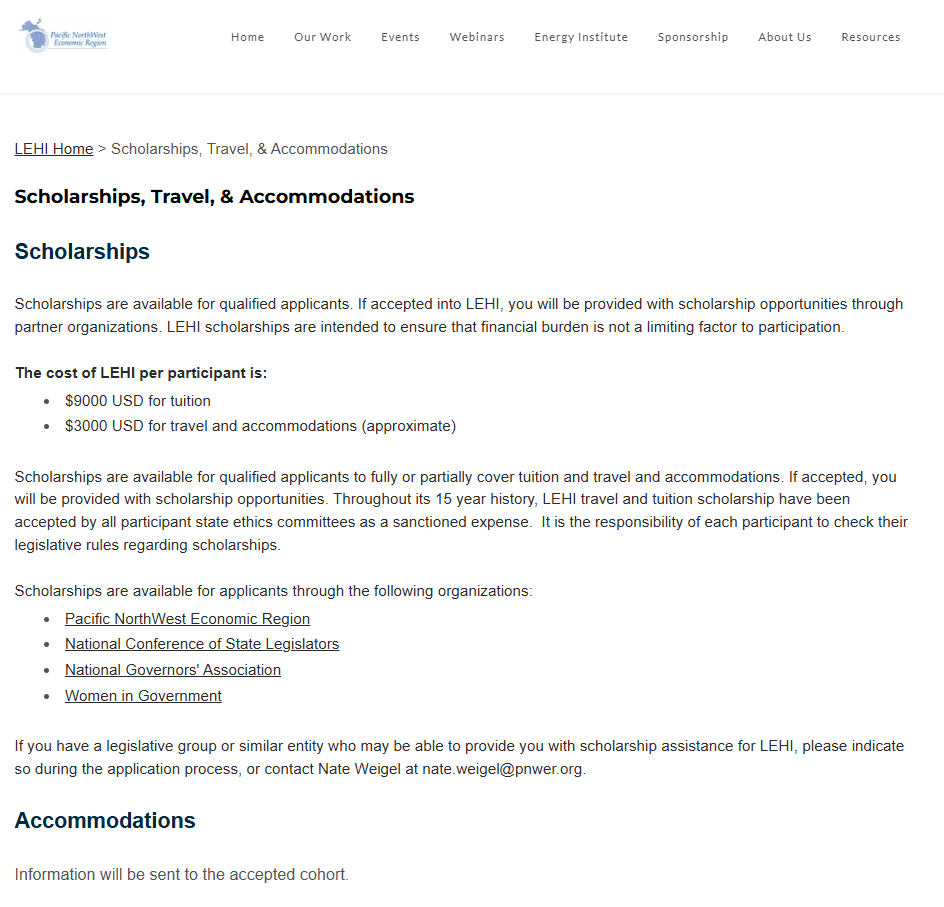
Line up for your indoctrinations politicians, and don’t forget that the Institute offers Scholarships, Travel, & Accommodations:
The list of LEHI alumni posted is remarkably extensive and is certainly not limited to the Pacific Northwest:
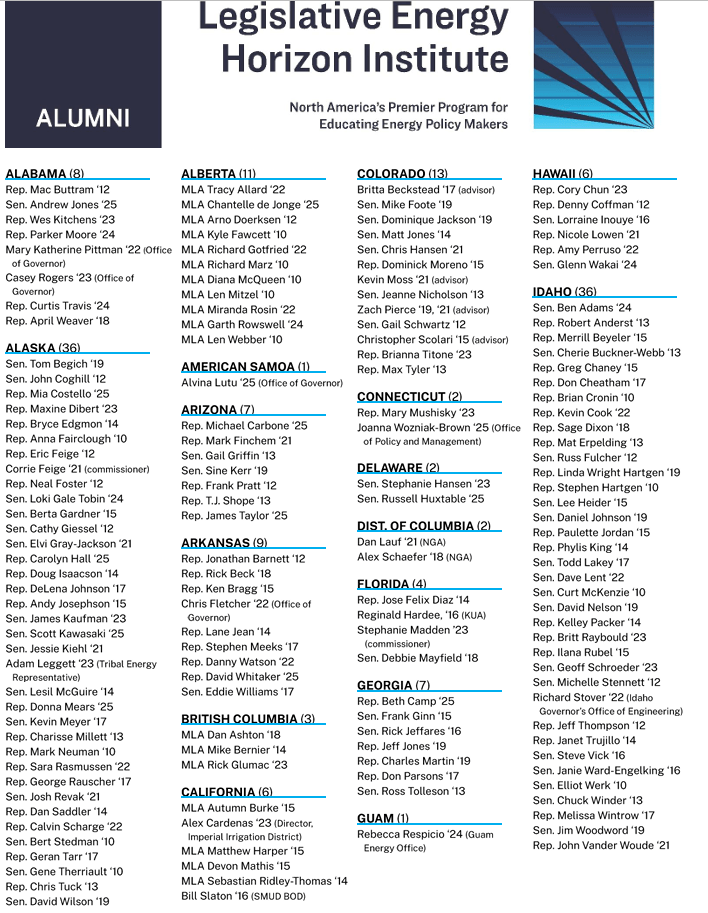
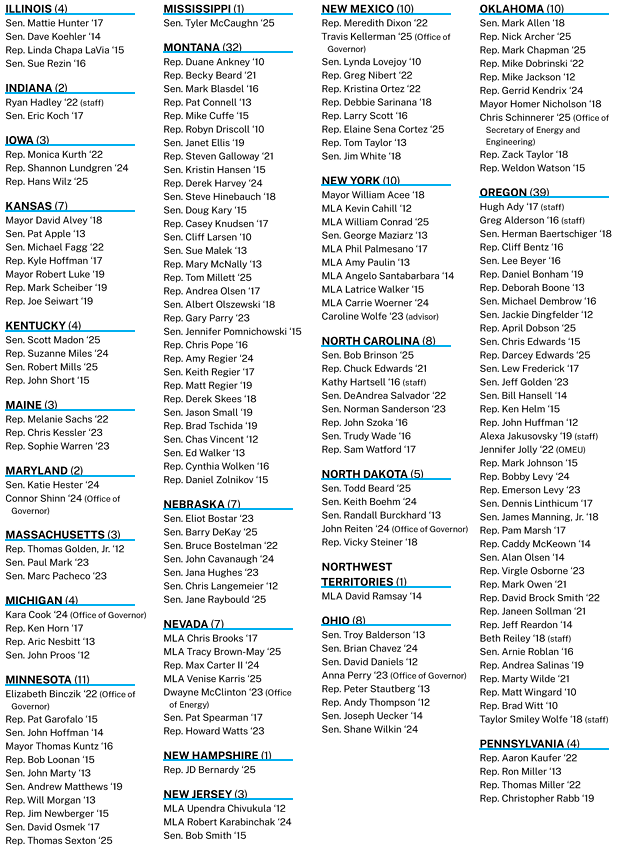
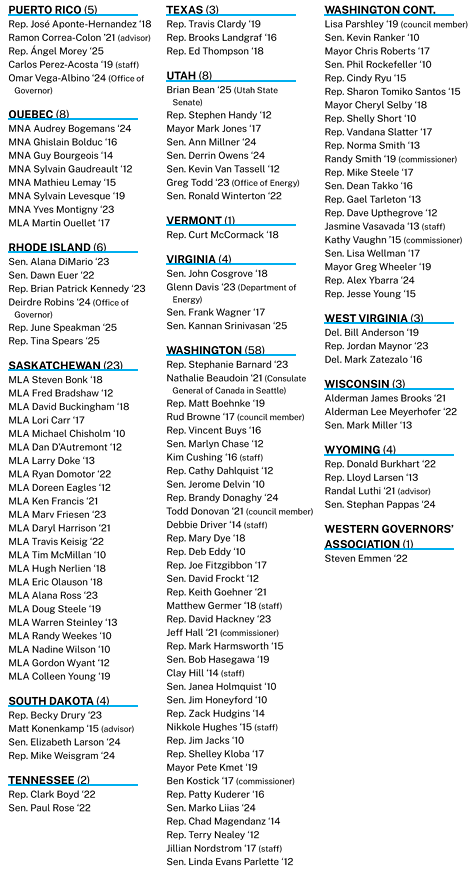
Among the truly vast list of US politicians and to a lesser extent Canadian politicians, you might have noted a few from British Columbia. These include those who have been MLAs in BC: Dan Ashton (BC United), Mike Bernier (BC United) and Rick Glumac (NDP). Glumac was recently President of the PNWER according to an official government press release:
BC Gov News
Archived version: Rick Glumac elected president of Pacific NorthWest Economic Region | BC Gov News
———————————————————————————————
So there you have it, when lobbying and industry influence, flush with industry money, meets indoctrinating, I mean um ‘educating’ politicians.
Pardon me if the organization looks like one giant front org for industry and US fossil fuel influence on its little brother to the North.
Front organization – Wikipedia
It even reminds a bit of the “Strong Towns” movement which emanated from the US. Its Nanaimo affiliate was an early champion of the failed Bill M216 aka the Professional Reliance Act, which would have allowed overriding municipal decisions by outside private interests.
—————————————————————————————————
Conclusion: Corporate Regionalism
I’ve come to refer to this whole type of phenomenon as corporate regionalism.
Corporate regionalism is a corporate push that attempts to substitute local community led interests with outside corporate interests, that are typically profit-driven, under the guise of broader regional efforts and initiatives.
This can and frequently includes corporate influence over regional and/or higher levels of government, as a means of pushing such an agenda over localities.
One of the key targets of corporate regionalism, is the use of land.
Corporate regionalism blurs borders, particularly local ones, as industry and government tied to it, advance its agenda over localized areas, often undermining local democracy to achieve its ends.
One of the most powerful tools that corporate regionalism appears to utilize is amalgamation as a means of assimilating and integrating local governments into centralized governance, whereby industry influence is much easier to concentrate and political access in localities is significantly reduced.
Examples of what could be considered corporate regionalism and the presence of which has been felt on the island:
The South Island Prosperity Partnership (SIPP), the Victoria-Saanich Citizens’ Assembly (note a top SIPP delegate provided a presentation to the assembly), Strong Towns, The Pacific NorthWest Economic Region, the UDI Capital Region.
Similar in concept are the Digital Supercluster, COAST and Canada’s Ocean Supercluster.
There are many clones of the corporate regionalist approach. They exist far and wide.
Let’s not forget the North Central Local Government Association:
The proposed “Permanent Provincial Housing Policy Roundtable” is an astroturfing effort by the Real Estate Lobby in BC, with the help of a complicit media in the province. Questions must be asked about close to $100 in value gifts to numerous MLAs. – CRD Watch Homepage
Corporate regionalism blurs the line between public and private. It blurs the line between lobbying, informational exchange, education, networking, consultation and advocacy, stakeholder relations/engagement, task forces, and committee meetings; policy shaping, policy making and policy implementing – as corporations seek subtle and sometimes not so subtle regional influence, primarily through influencing politicians to do their bidding through non-governmental organizations that survive from a mixture of public and private funding.
Paid for ‘partnerships’/’alliances’ that are almost invariably private sector leaning, even when they do rely on a heavy dose of public sector funding, expensive paid memberships, sponsorships, ‘scholarships’, donations – all of these keep a flow of money both public and private generally moving in the direction that corporate monied influence wants to predominate the political agenda with.
Corporate regionalism also has a tendency to muddy the water between public relations, ‘educational’/promotional material (often glossy), studies, reports, and press releases; between the environment and organizations that make major profits from activities that damage and sometimes permanently alter it. Threats to public health by the activities of the member organizations are often overlooked. Corporate regionalism takes place almost always hand in hand with major greenwashing of industrial activity, and frequently seeks to increase such activity under the guise of pushing economic ‘growth’/expansion and increasing GDP to increase corporate profits regardless of the consequences. Unsustainability and ecological limitations (carrying capacity) are made to blur and be forgotten, being replaced instead with claims of sustainable development.
Corporate regionalism when enacted is almost always top-down in nature. The power structure of its way of operating, does not come from the ground up, although it wants the public to think it operates that way.
Corporate regionalism from the top is often enabled by diplomacy and intergovernmental relations, in some instances begging important questions regarding sovereignty and potential foreign interference. Sometimes it is forced by open and brazen executive use of power e.g. forced amalgamations/local government annexations, or legislation that forces the hand of lower levels of government on local issues/decision-making.
Although it likes to create an appearance of being grassroots, far more often than not corporate regionalism is astroturfing. As it is not driven by community, corporate regionalism will frequently attempt to blur community, e.g. rather than a local community, it will use terms like the development community.
Why is all this allowed to happen? Why is there not appropriate regulation to ensure the lines are not blurred and conflict of interest issues do not arise? It is because governments and corporations have worked together to make it happen. Corporate regionalism is fostered by a wilful blindness by government to not see such issues. It is fostered through intentional lack of regulation, deregulation, heavy handedness by higher levels of government toward lower levels of government, and heavy government funding of the entities themselves that seek to influence government in the favour of their paying corporate member organizations.
The danger of undue influence, corporate capture, regulatory capture and even potentially state or state agency capture, exist in a rife feeding ground, an atmosphere enabled by corporate regionalism through government subsidization, involvement and promotion of it over local, ecological and public interest.
————————————————————————————————–
Appendix A: the Constitution of the YYJ Prosperity Association (July 4, 2023):
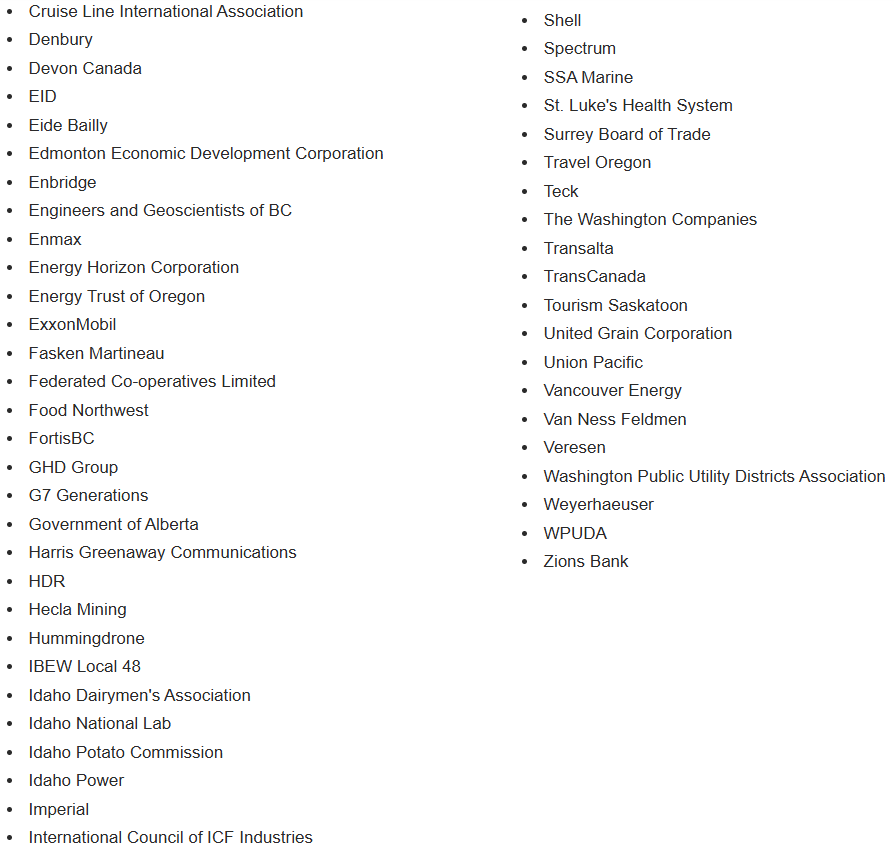
Appendix B: The Pacific NorthWest Economic Region’s members at the time of writing.
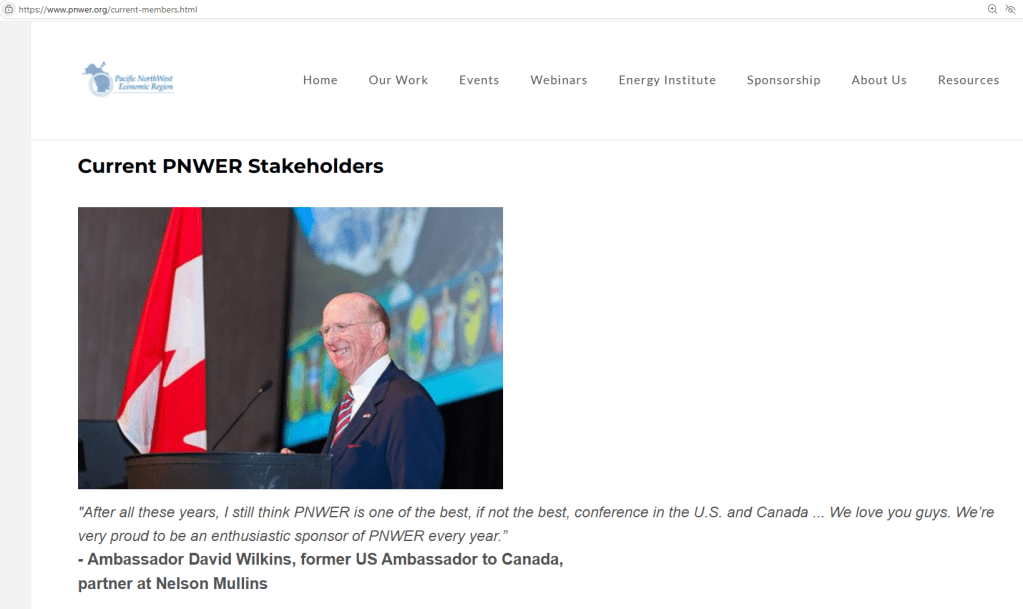
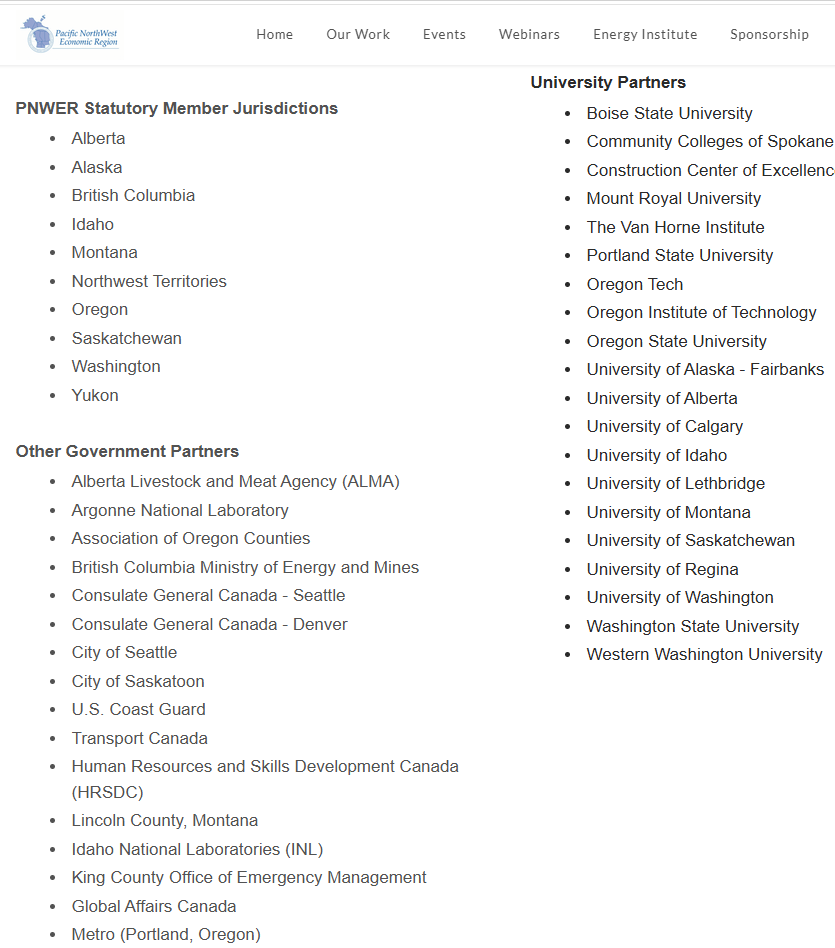
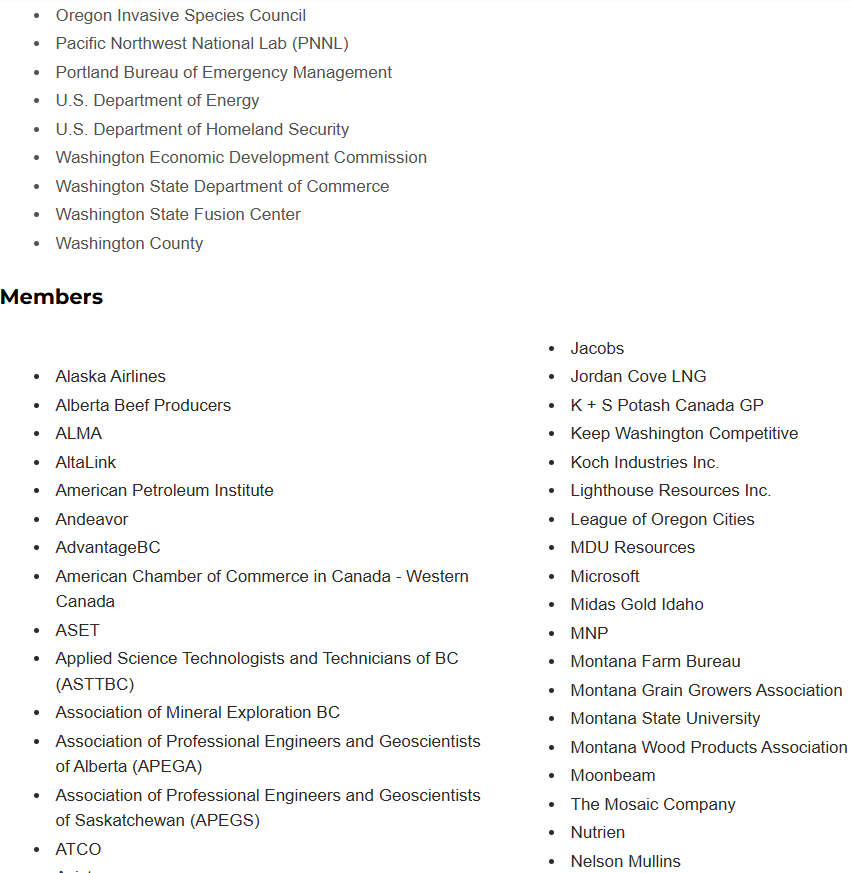
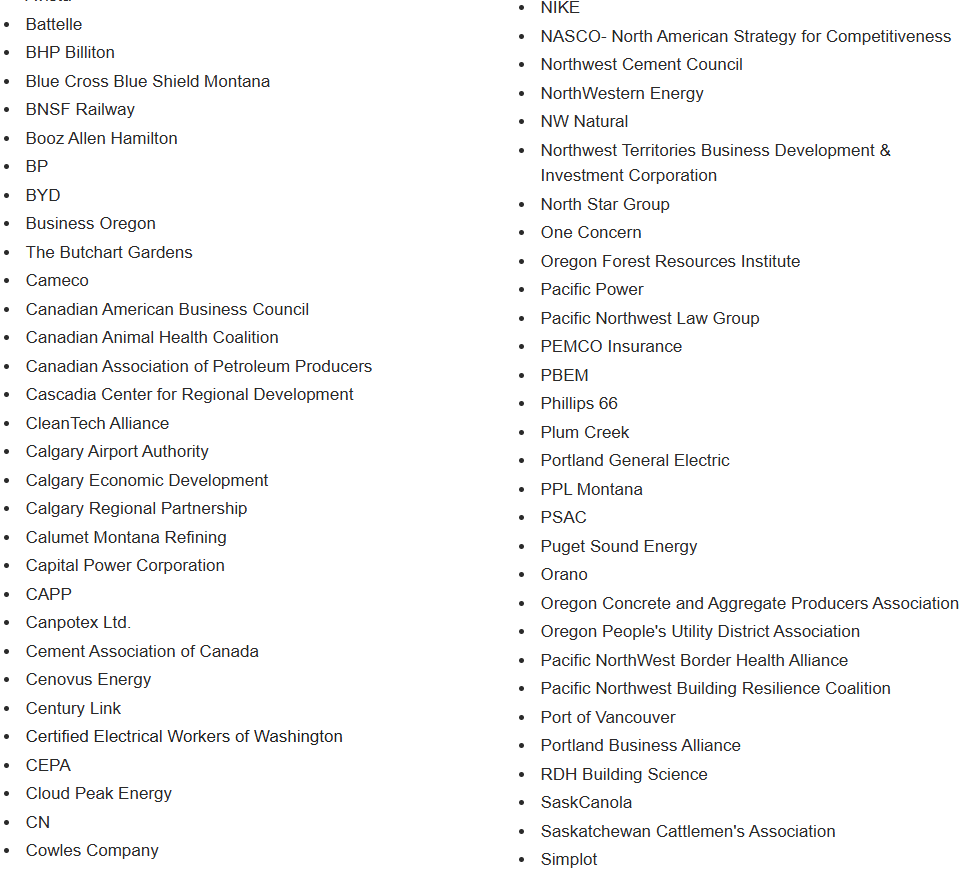
The following is a screenshot of the PNWER’s members at the time of writing.
This is their members page, although how to find it is very difficult on their website. It doesn’t appear in their drop down menu.
Current Members – PNWER
This link is to an Archived version from February 2026.
PNWER Statutory Member Jurisdictions
Alberta
Alaska
British Columbia
Idaho
Montana
Northwest Territories
Oregon
Saskatchewan
Washington
Yukon
Other Government Partners
Alberta Livestock and Meat Agency (ALMA)
Argonne National Laboratory
Association of Oregon Counties
British Columbia Ministry of Energy and Mines
Consulate General Canada – Seattle
Consulate General Canada – Denver
City of Seattle
City of Saskatoon
U.S. Coast Guard
Transport Canada
Human Resources and Skills Development Canada (HRSDC)
Lincoln County, Montana
Idaho National Laboratories (INL)
King County Office of Emergency Management
Global Affairs Canada
Metro (Portland, Oregon)
Oregon Invasive Species Council
Pacific Northwest National Lab (PNNL)
Portland Bureau of Emergency Management
U.S. Department of Energy
U.S. Department of Homeland Security
Washington Economic Development Commission
Washington State Department of Commerce
Washington State Fusion Center
Washington County
University Partners
Boise State University
Community Colleges of Spokane
Construction Center of Excellence
Mount Royal University
The Van Horne Institute
Portland State University
Oregon Tech
Oregon Institute of Technology
Oregon State University
University of Alaska – Fairbanks
University of Alberta
University of Calgary
University of Idaho
University of Lethbridge
University of Montana
University of Saskatchewan
University of Regina
University of Washington
Washington State University
Western Washington University
Members
Alaska Airlines
Alberta Beef Producers
ALMA
AltaLink
American Petroleum Institute
Andeavor
AdvantageBC
American Chamber of Commerce in Canada – Western Canada
ASET
Applied Science Technologists and Technicians of BC (ASTTBC)
Association of Mineral Exploration BC
Association of Professional Engineers and Geoscientists of Alberta (APEGA)
Association of Professional Engineers and Geoscientists of Saskatchewan (APEGS)
ATCO
Avista
Battelle
BHP Billiton
Blue Cross Blue Shield Montana
BNSF Railway
Booz Allen Hamilton
BP
BYD
Business Oregon
The Butchart Gardens
Cameco
Canadian American Business Council
Canadian Animal Health Coalition
Canadian Association of Petroleum Producers
Cascadia Center for Regional Development
CleanTech Alliance
Calgary Airport Authority
Calgary Economic Development
Calgary Regional Partnership
Calumet Montana Refining
Capital Power Corporation
CAPP
Canpotex Ltd.
Cement Association of Canada
Cenovus Energy
Century Link
Certified Electrical Workers of Washington
CEPA
Cloud Peak Energy
CN
Cowles Company
Cruise Line International Association
Denbury
Devon Canada
EID
Eide Bailly
Edmonton Economic Development Corporation
Enbridge
Engineers and Geoscientists of BC
Enmax
Energy Horizon Corporation
Energy Trust of Oregon
ExxonMobil
Fasken Martineau
Federated Co-operatives Limited
Food Northwest
FortisBC
GHD Group
G7 Generations
Government of Alberta
Harris Greenaway Communications
HDR
Hecla Mining
Hummingdrone
IBEW Local 48
Idaho Dairymen’s Association
Idaho National Lab
Idaho Potato Commission
Idaho Power
Imperial
International Council of ICF Industries
Jacobs
Jordan Cove LNG
K + S Potash Canada GP
Keep Washington Competitive
Koch Industries Inc.
Lighthouse Resources Inc.
League of Oregon Cities
MDU Resources
Microsoft
Midas Gold Idaho
MNP
Montana Farm Bureau
Montana Grain Growers Association
Montana State University
Montana Wood Products Association
Moonbeam
The Mosaic Company
Nutrien
Nelson Mullins
NIKE
NASCO- North American Strategy for Competitiveness
Northwest Cement Council
NorthWestern Energy
NW Natural
Northwest Territories Business Development & Investment Corporation
North Star Group
One Concern
Oregon Forest Resources Institute
Pacific Power
Pacific Northwest Law Group
PEMCO Insurance
PBEM
Phillips 66
Plum Creek
Portland General Electric
PPL Montana
PSAC
Puget Sound Energy
Orano
Oregon Concrete and Aggregate Producers Association
Oregon People’s Utility District Association
Pacific NorthWest Border Health Alliance
Pacific Northwest Building Resilience Coalition
Port of Vancouver
Portland Business Alliance
RDH Building Science
SaskCanola
Saskatchewan Cattlemen’s Association
Simplot
Shell
Spectrum
SSA Marine
St. Luke’s Health System
Surrey Board of Trade
Travel Oregon
Teck
The Washington Companies
Transalta
TransCanada
Tourism Saskatoon
United Grain Corporation
Union Pacific
Vancouver Energy
Van Ness Feldmen
Veresen
Washington Public Utility Districts Association
Weyerhaeuser
WPUDA
Zions Bank
—————————————————————————————————
See also:
List of articles and other resources on corporate regionalism. – CRD Watch Homepage
“From Policy to Practice: Regional Planning Perspectives” UDI luncheon held on April 16, 2026 – CRD Watch Homepage
The CVRD issue in focus. The Playbook: How BC Regional Districts Lock In Policy Before Anyone Can Stop Them, by Arthur McInnis – CRD Watch Homepage
List of articles and other resources regarding the CVRD. – CRD Watch Homepage
Index of articles and other resources about the South Island Prosperity Partnership (SIPP). – CRD Watch Homepage
The South Island Prosperity Partnership (SIPP) claims “$93.20 per capita annual ROI on SIPP initiatives”, fails to provide evidence for their claim, when asked. – CRD Watch Homepage
Stop Bill M216 Before Local Democracy is Dismantled on Nov 17, 2025 – CRD Watch Homepage
Public Release of the Urban Development Institute (UDI)’s hidden members directory dated to the beginning of 2024. The directory contains dozens of government branches that are hiding their memberships in the registered lobbying organization for development and real estate interests from the public. – CRD Watch Homepage
Too much heat: The UDI pulls down its list of backroom committees that meet with the Government of British Columbia and Local Governments – CRD Watch Homepage
Front organization – Wikipedia
Business unionism – Wikipedia


Leave a Reply