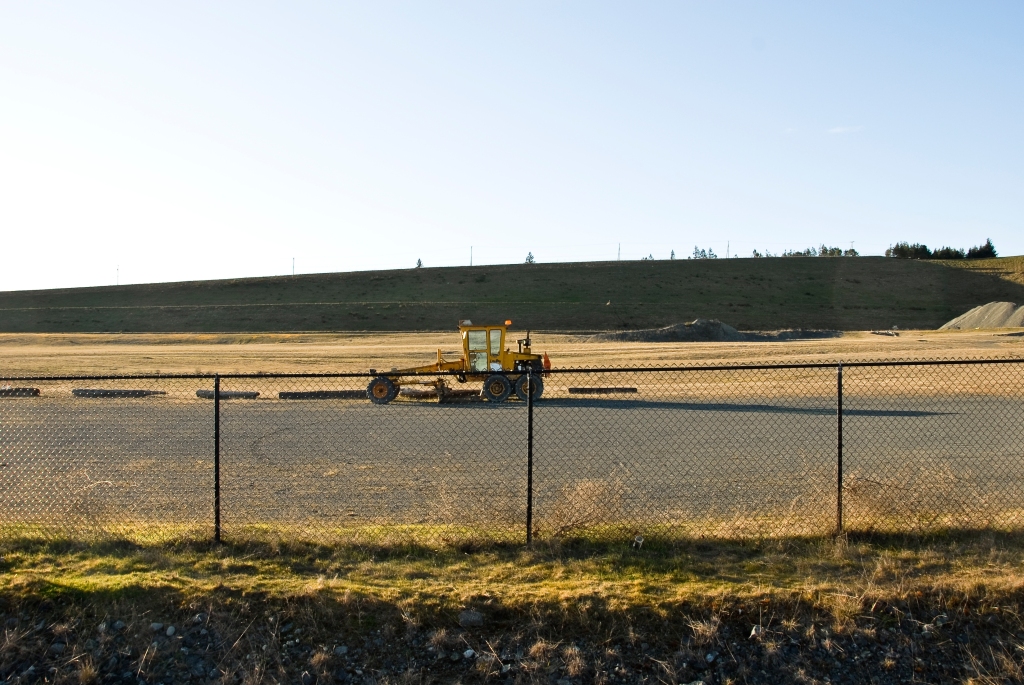
Newspaper clippings from the Times Colonist in 1981 reveal that the Housing Crisis scheme has been recycled a generation later.
By Sasha Izard
Feb 8, 2026
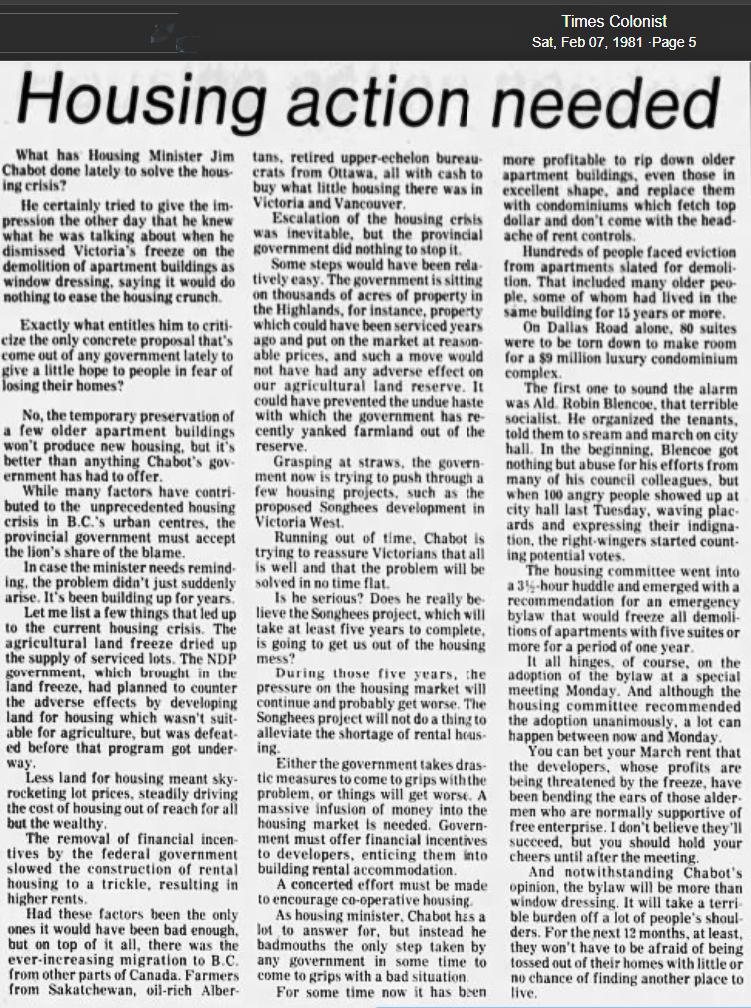
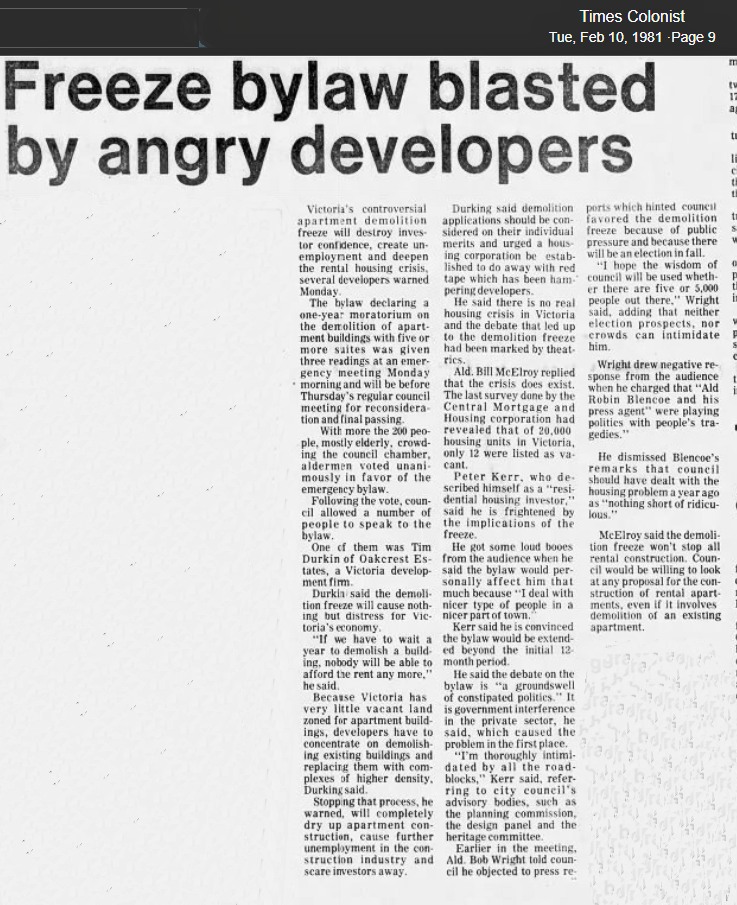
The following are excerpts from February 1981 Times Colonist articles:
“While many factors have contributed to the unprecedented housing crisis in B.C.’s urban centres, the provincial government must accept the lion’s share of the blame. In case the minister needs reminding, the problem didn’t just suddenly arise. It’s been building up for years. Let me list a few things that led up to the current housing crisis.”
“Escalation of the housing crisis was inevitable, but the provincial government did nothing to stop it. Some steps would have been relatively easy. The government is sitting on thousands of acres of property in the Highlands, for instance, property which could have been serviced years ago and put on the market at reasonable prices.”
“During those five years, the pressure on the housing market will continue and probably get worse. Either the government takes drastic measures to come to grips with the problem, or things will get worse. A massive infusion of money into the housing market is needed. Government must offer financial incentives to developers, enticing them into building rental accommodation.”
“Durking said the demolition freeze will cause nothing but distress for Victoria’s economy. “If we have to wait a year to demolish a building nobody will be able to afford the rent any more,” he said.
Because Victoria has very little vacant land zoned for apartment buildings, developers have to concentrate on demolishing existing buildings and replacing them with complexes of higher density, Durking said. Stopping that process he warned will completely dry up apartment construction, cause further unemployment in the construction industry and scare investors away.
Durking said demolition applications should be considered on their individual merits and urged a housing corporation be established to do away with red tape, which has been hampering developers.
He said there is no real housing crisis in Victoria and the debate that led up to the demolition freeze has been marked by theatrics.
Ald. Bill McElroy replied that the crisis does exist. The last survey done by the Central Mortgage and Housing corporation had revealed that of 20,000 housing units in Victoria only 12 were listed as vacant. Peter Kerr, who described himself as a “residential housing investor said he is frightened by the implications of the freeze.””
“Victoria’s controversial apartment demolition freeze will destroy investor confidence, create unempoyment and deepen the rental housing crisis, several developers warned Monday.”
————————————————————————————————
Housing Crises: A Manifestation of Crisis Corporatism
In 2010, Michael Vonn wrote an article for the George Straight about a job posting for a BC Government Executive position:
“Here’s exactly what it says under the “Characteristics/Behaviours” section of the role profile: “Executives anticipate, and are prepared to institute change quickly. At times, to capitalize on the best opportunity, executives create a crisis to force change.”
Micheal Vonn: B.C. government job posting exposes crisis of democracy | Georgia Straight Vancouver’s source for arts, culture, and events
————————————————————————————————-
The so-called housing crisis, which is actually just a lack of affordability driven by the market and a government absolutely beholden to it, bears all the hallmarks of crisis capitalism. Create a crisis, or even a fake crisis if necessary, to advance the corporate agenda over the public interest.
At the same time make sure to drown out any dissenting voices in the humdrum and buzz around the crisis narrative, or suppress opposition with flak, and make sure not too much thinking gets in the way of a useful narrative based around reflexive raw emotional language.
Why reinvent the wheel? If something worked for industry decades earlier, why not have it resurface again during another generation?
Clippings from the Times Colonist in 1981 (At the top of this article) reveal how a narrative of a “housing crisis” was used over 4 decades ago to drive a narrative favourable to industry. We can thank ourselves that the forested Highlands weren’t developed, as they had been pushing for at the time. The parallels of redevelopment leading to gentrification and what are seeing now are stark.
However, at some point all that faded into distant memory. Actually it left most people’s memory, and the new generation had yet to be inoculated against the previous use of a housing crisis narrative, with a considerable dose of theatrics attached to it.
The government however, decades later would be firing up policies that would ensure few of the new generation would be able to afford a home to raise a family in, so for them, there would be an affordability crisis, but not for the same reasons that the government was pushing in its narrative.
It wasn’t so much a lack of supply, as intentionally overheating demand through massive immigration quotas, that supply could never reasonably catch up to, leading to a musical chairs situation when it comes to housing, the financialization/commodification of the housing market, the focus on market housing (the incentive for which from developers is primarily for the upper levels of the market), and a war on single family homes that served the interests of developer profit margins, and not that of Canadians with or wishing to start families. In addition to the lack of general affordability these factors have fostered, the costs to the urban ecology and the urban forest have been catastrophic.
——————————————————————————————–
In the leadup to the 2010 Olympics, the BC NDP while in opposition, began its crisis rhetoric around housing, complaining that the Campbell Government had squandered billions on the Olympics that could have been used to create desperately needed housing instead. In 2011, the UDI a lobby for corporate development and real estate interests, donated directly to the BC NDP, as it did again in 2017 as the BC NDP was returning to power.
In 2012 the Globe and Mail, which focuses on pushing the agenda of big business, started pumping the the goal of making Canada’s population almost triple itself by the end of the Century to 100 million, a surefire way to create a housing affordability crisis. This was bolstered by The Century Initiative, a lobby founded around that time, which the Globe and other media outlets would soon be pumping.
Why Canada needs a flood of immigrants – The Globe and Mail (2012)
The leadership of the Century Initiative had close connections to Global Government Consulting Firm McKinsey & Company, Black Rock an international Real Estate Investment Trust (REIT), The Federal Liberal Party, and the Business Council of Canada, which represents the interests of mega corporations, including multi-national ones.
McKinsey would come under fire in Canada a decade later. Its recent CEO and co-founder of the Century Initiative Dominic Barton was recalled from his position of Canada’s Ambassador to China. His wife Geraldine Buckingham was BlackRock’s Chair and Head of Asia Pacific and a member of the firm’s Global Executive Committee
BlackRock – Wikipedia
McKinsey’s power over Canada’s immigration system, became so difficult to ignore (although it was ignored for many years) that even a CBC article would refer to it as a “Shadow Government”:
The value of one consulting firm’s federal contracts has skyrocketed under the Trudeau government | CBC News
McKinsey contracts top $100M under Justin Trudeau | CBC Radio
Federal government flouted rules when awarding McKinsey contracts: AG report | CBC News
At the same time as the CMHC was a paying member of the UDI development/real estate lobby (something they ended in 2023), the Federal Government involving the CMHC and a federal behavioural nudge agency, looked into the logistics through a process costing $300 million to the taxpayer, of what it would take to increase the housing supply by removing barriers to it. It is difficult to see this push as anything other than setting a foundation for a massive and costly public deception campaign to manipulate the public into massively increasing housing supply:
“Innovative and Disruptive Thinking”: Impact Canada, a Federal Government Nudge Unit tied to the Prime Minister’s Office, was engaged in a several hundred million dollar program seeking ways to remove barriers to housing supply. – CRD Watch Homepage
In 2024, banks were openly calculating that the massive immigration rates under the Trudeau were having the effect of actually lowering productivity.
Raising the Bar, Not Just Lowering the Number: Canada’s Immigration Policy Confronts Critical Choices | Post
With even the banks shifting tune, the effects of the Trudeau government having at one point seen the average price of housing in Canada near doubling during its tenure (See graph in Appendix at the end of the article, led to the government finally having to admit to itself that the massive influx of immigration overstimulating housing demand was no longer politically tenable.
Not much time prior to the peak of the average housing costs under his tenure (in 2022 when Canada reached a record amount of immigration), Trudeau managed to beat around the bush about the massive increase in average housing costs in Canada when interviewed by Evan Solomon; with the Prime Minister, instead clinging to a lack of supply and too much red tape being the issue, despite that supply could never keep up with the demand being driven by his sky-high immigration targets.
Trudeau on deficit concerns, his 2021 regrets, and what he thinks will define 2022
While Trudeau was stalling on taking required measures, in 2022, the Bank of Canada stepped in, rapidly increasing interest rates, (albeit not to the levels of the 1980s) reducing the ability to purchase housing on credit, something that had the effect of driving the prices down somewhat from peak level, but still not far from the all time high.
The inner circles of the Trudeau government must have realized by this point that they needed to take some action on demand. In order to cool down the demand somewhat, the Trudeau government on Jan 1, 2023 implemented, the Prohibition on the Purchase of Residential Property by Non-Canadians Act, aka the so-called Foreign Buyers Ban, which was a misnomer. The Act was full of loopholes, allowing foreign investment into real estate.
See: Offshore on shore? Prime ecological land on the shore of Oak Bay, up for sale for over 50 million dollars – reveals giant Elephant in the Room loophole in the so-called “Foreign Buyers Ban”. – CRD Watch Homepage
The housing prices continued their slight downward trend, but not an overwhelming one.
In 2024, the Trudeau government took another step to curb demand, decreasing student visas. Prices continued downward somewhat, but again not by a particularly significant amount.
Canada to stabilize growth and decrease number of new international student permits issued to approximately 360,000 for 2024 – Canada.ca
In 2025, Trudeau resigned before finishing his last term, having effectively been pushed out by his own party. Before doing so, he significantly dropped the rate of new permanent residents, followed by his successor Mark Carney making the decision toward the end of 2025 to reduce those rates significantly, with the annual amounts of permanent residents now decreasing.
Not surprisingly, having cooled the musical chairs scenario that the Trudeau government had created by artificially stimulating/spiking housing demand, the market is beginning to return to lower levels in 2026.
TD Economics – Is the Dial-Back of Immigration Having the Intended Impact in Canada?
Several years earlier in 2022, I had written a letter published in the Times Colonist, and a variant was published in the Saanich News. Here is an excerpt:
“Democracy comes from the bottom up, not from the top down.
What is being referred to as the “housing crisis” is manufactured by the government. There would be no reason for it, if they weren’t doing everything they can to cram greater amounts of people into smaller and smaller spaces, at higher and higher square-metre costs. The math isn’t complicated and the developers know it.
Government population policy is unsustainable”.
“Don’t blame Oak Bay for a national problem” [March 29, 2022 – Times Colonist]
I received a ton of flak for it at the time online, yet when the Liberal Government finally realized the mistake they had made, and reversed their policies several years later, those who had given the flak previously, were notably silent on the subject when it came to the Liberal Party moderating their immigration quotas, something I had called for much earlier.
—————————————————————————————————
The narrative from the development industry shifts.
The numerous cries of a housing crisis flooding the discourse, began to shift toward the end of 2025.
During public input at the Oct 6, 2025 Saanich Council meeting, Abstract’s Director of Planning said:
“Out of prudence, we are carefully phasing our projects, to avoid over-supplying the market.”
Above: Adam Cooper, Speaking on behalf of Abstract Developments.
The company Abstract Developments, was seeking a development permit extension for 24 townhomes on 3 former single family housing lots on the corner of Rainbow/Sevenoaks in the Swan Lake area.
Although the project had been approved 2 and a half earlier on the basis of a dire need for housing, Abstract had not put a shovel in the ground.
The development approval went through at the time on the basis that it would deliver critically needed housing during the housing crisis. Fast forward ahead 2 and a half years later, and having been sitting on the land during the supposed housing crisis, Abstract received a development permit extension.
The following month at the Nov 17, 2025 Saanich Council Meeting Abstract won approval from Saanich without public hearing for an eight storey apartment building, just down the street.
Council Meeting
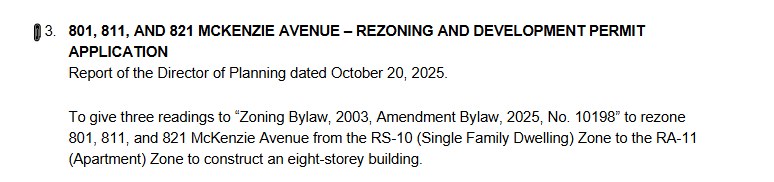
One of the proponents during public input brought up a desperate need for housing.
So how can it be, that there was housing oversupply the previous month, but a desperate need for housing supply the following month?
I submit this conflicting narrative as a classic example of doublespeak, and the politicians playing along with the game.
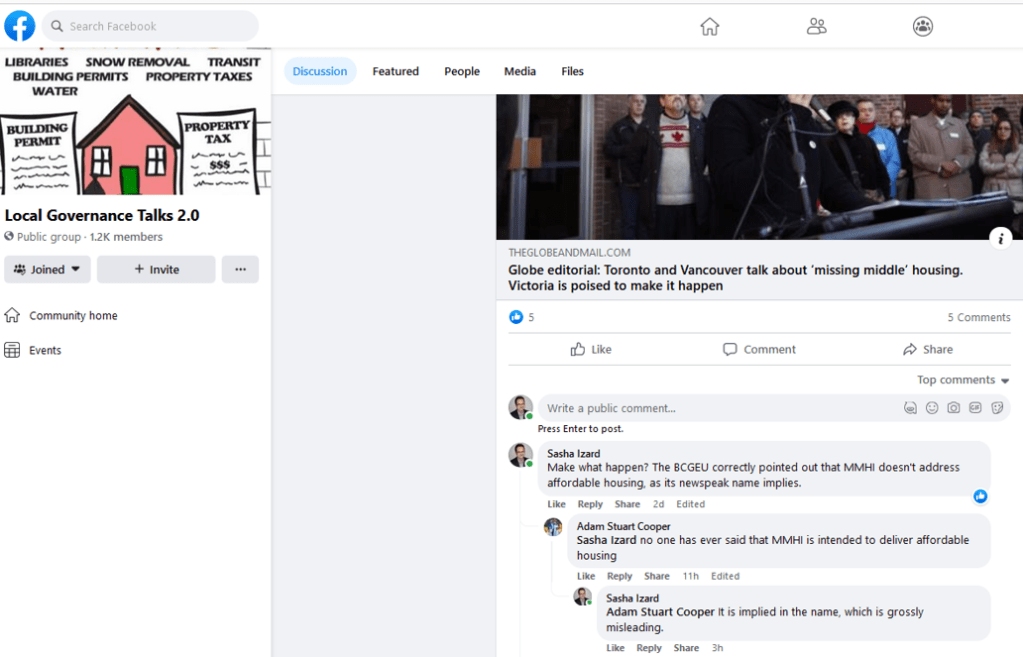
In 2022, Abstract employee, Adam Stuart Cooper (while he was the Chair of the UDI) wrote in regard to the Missing Middle Housing Initiative (MMHI): “no one has ever said that MMHI is intended to deliver affordable housing”. The UDI had been lobbying missing middle housing to multiple levels of government, and it was adopted soon after the election.
See also:
Abstract’s hypocrisy on parade: “Out of prudence, we are carefully phasing our projects, to avoid over-supplying the market.” – CRD Watch Homepage
————————————————————————————————–
Conclusion:
We saw how the Housing Crisis narrative was pushed by the Times Colonist in 1981.
In 2010, the Provincial Government was seeking an Executive position who could “anticipate, and are prepared to institute change quickly. At times, to capitalize on the best opportunity, executives create a crisis to force change.”
At this time the NDP while in opposition, was pushing forward with a narrative that the billions spent on the Vancouver Olympics had been squandered, in that they would have been better spent building much needed housing.
The UDI development/real estate lobby began to donate to the NDP directly the following year, and did so again in 2017 as the NDP were coming to power.
Utilizing the Housing Crisis narrative, the NDP responding to UDI lobbying through housing bills, rammed through a series of draconian reforms to zoning and housing policy, wiping out vast amounts of public hearings across the Province, and forcing housing targets and advisors on municipalities.
How the Development and Real Estate Lobby Pressed Mandatory Housing Targets, Mass Upzoning, Captured Official Community Plans, and Made the Shutting Down of Public Hearings the Norm in British Columbia Under the NDP Government – CRD Watch Homepage
Freedom of Information reveals that the Province of B.C. was working to implement what the registered lobbying organization, the Urban Development Institute, had been pushing for. This culminated in the recent Housing Bills that override local government authority on zoning. – CRD Watch Homepage
The Urban Development Institute lobbied the Province of BC to implement what they called “Global Housing Targets”. The Province would deliver new Housing Bills in response. – CRD Watch Homepage
Index of articles revealing major lobbying influence on B.C. Provincial Housing Bills and Housing Targets. – CRD Watch Homepage
At the federal level many billions were spent on the failed National Housing Strategy, much of which wound up into the pockets of companies involved in real estate and development.
During the Covid-19 “crisis”, the Federal Government doled out hundreds of thousands of dollars of emergency response aid to the UDI, almost certainly something that repeated to various lobbies across Canada.
Corporate welfare: How the Federal Government of Canada provided one lobby for development and real estate (the Urban Development Institute), hundreds of thousands of dollars in emergency response aid, during the pandemic. – CRD Watch Homepage
During the ‘crisis’ of the pandemic, the District of Saanich provided a nice graph to community associations on how public hearings would be waived.
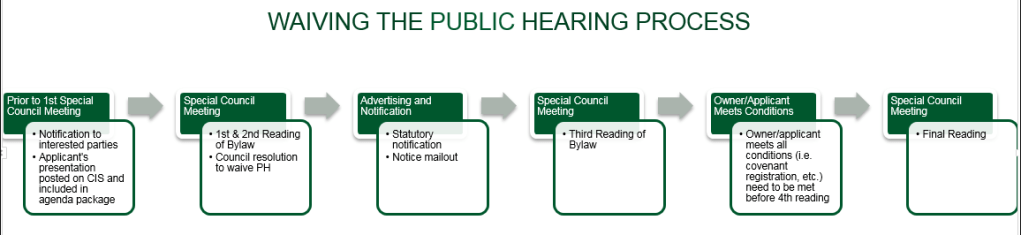
Meanwhile, the District staff were speaking to the UDI about decoupling the Local Area Plans from the OCP, and that it would be a great opportunity moving forward, something that happened 2 years later.
Saanich and a lobbying organization for development and real estate discussed decoupling the Local Area Plans from the Official Community Plan in the spring of 2022 – CRD Watch Homepage
—————————————————————————————————
And now after a decade, media and organizations that pushed a disastrous narrative are taking an about turn:
10 ways to take advantage of Canada’s housing ‘correction’ | Vancouver Sun
The numbers don’t lie: The housing crisis is not caused by a supply shortage – CCPA
https://www.bcrea.bc.ca/wp-content/uploads/2026-01-26-market-intelligence.pdf
Opinion: We were never building affordable homes in Vancouver | Urbanized
————————————————————————————————–
In 2025, Rennie & Associates Realty Ltd., (the company of the so-called Condo King in Vancouver Bob Rennie who to solve the housing crisis had advocated to the Premier at a UDI event a super abundance of housing oversupply in 2021), laid off a quarter of its home office team.
Despite this in 2025, the Premier of BC, was still busy acting as his familiar lapdog at a UDI event at the Hyatt in Vancouver:
The David Eby Confession: Premier Eby talking to the ‘Condo King’ Bob Rennie, finally spilled the beans in front of the camera, on how UDI lobbying played key role in the creation of the Provincial Housing Bills. – CRD Watch Homepage
David Eby Before and After: How David Eby’s former criticisms of the political influence of the so-called ‘Condo King’ of Vancouver Bob Rennie, when Eby was a member of the opposition; turned once in power, to Eby becoming Rennie’s political follower. – CRD Watch Homepage
As the development industry’s fortunes have shifted however, so too have there been shakeups in the leadership of its most powerful lobby. In 2025 amid restructuring, the UDI Capital Region’s Executive Director left the organization after over a decade in that position.
Similarly, the following year in 2026 Anne McMullin, the UDI’s longtime President and CEO stepped down.
————————————————————————————————-
The housing crisis created by the government and for which industry had thrived and profiteered on, had now once the government abandoned many of the same policies which had advanced it, morphed into a crippling crisis for that very same industry.
On the plus side, the price of condos have plummeted, but for those still wishing to have a family and/or a single family home, with many of them having been demolished for upzoning (just as happened decades earlier), or held off the market by developers to prevent oversupplying it, the prices remain far out of reach for many.
Let’s not forget, lest these patterns repeat again the next generation. The next time government and industry scream crisis like the proverbial child on the hill crying wolf over and over again, stop and think carefully. The wolves just might be the ones wearing sheep’s clothing.
————————————————————————————————-
See also:
Index of articles revealing major lobbying influence on B.C. Provincial Housing Bills and Housing Targets. – CRD Watch Homepage
Index of articles regarding lobby events and other meetings between government and lobbyists. – CRD Watch Homepage
Too much heat: The UDI pulls down its list of backroom committees that meet with the Government of British Columbia and Local Governments – CRD Watch Homepage
Index of articles and other documentation of lobbying of the Federal Government. – CRD Watch Homepage
————————————————————————————————-
Appendix: Graphs
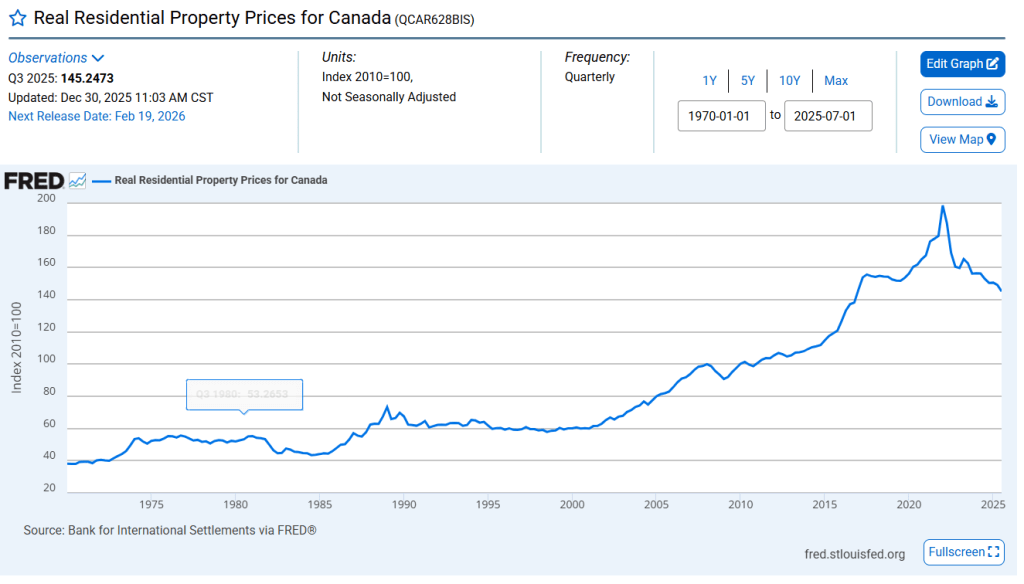
Real Residential Property Prices for Canada (QCAR628BIS) | FRED | St. Louis Fed
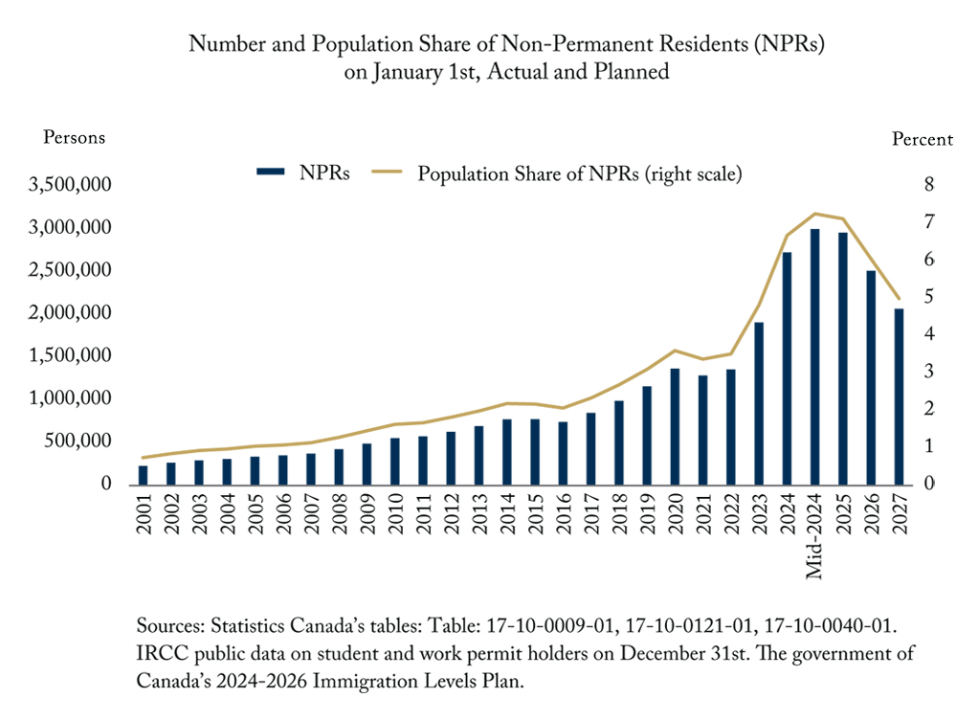

 CRD Watch Homepage
Leave a comment