The Fate of one of the last Surviving Garry Oak Groves in Cadboro Bay Hangs in the Balance: The District of Saanich Doesn’t Appear to Know What Will Happen to it.
By Sasha Izard
Dec 12, 2024
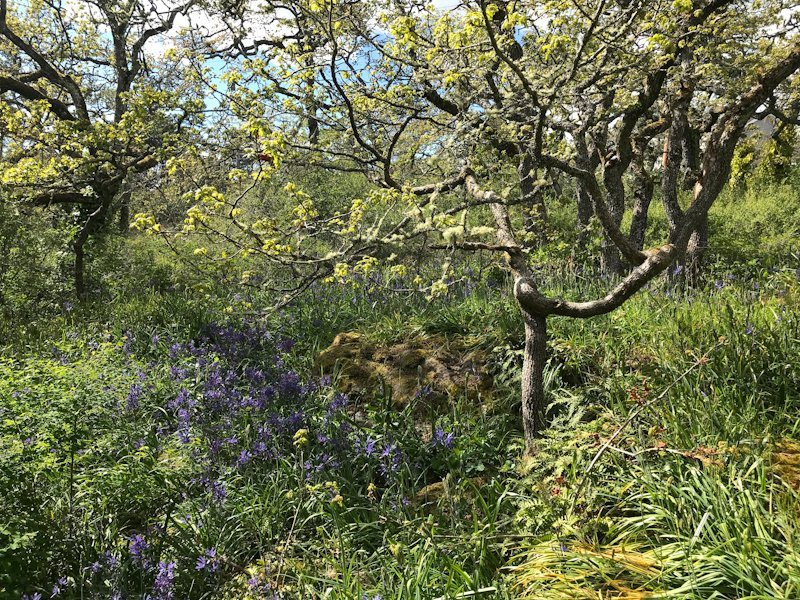
A Garry Oak grove flourishing with Camas, is in the centre of a belt of surviving Garry Oak eco-system on 10 Mile Point. The belt’s beginning at the junction of Sea View Rd. and Tudor, is imminently threatened by new development allowed by BC Bill 44 (2023), which instantly provides for the upzoning of up to 4-6 times as many housing units on previous single family home lots, without a public hearing.
The Garry Oak eco-system is a legacy of indigenous Coast Salish peoples, for whom the bulbs of blue camas were a staple food source. Camas acts symbiotically with Garry Oaks and as a result flourishes around them. With the Province’s passing of Bill 44 and Saanich’s lack of real protections for these surviving eco-systems coupled with the powerful developer/speculator profit-motive, most of the few remaining Garry Oak groves in the District with some few exceptions on park lands, are bound for extinction.
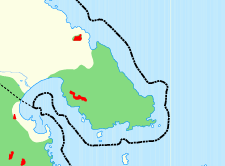
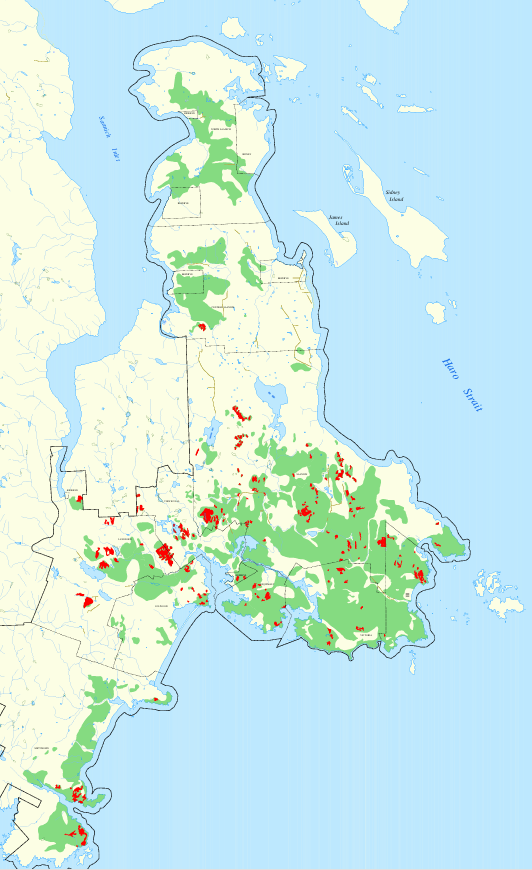
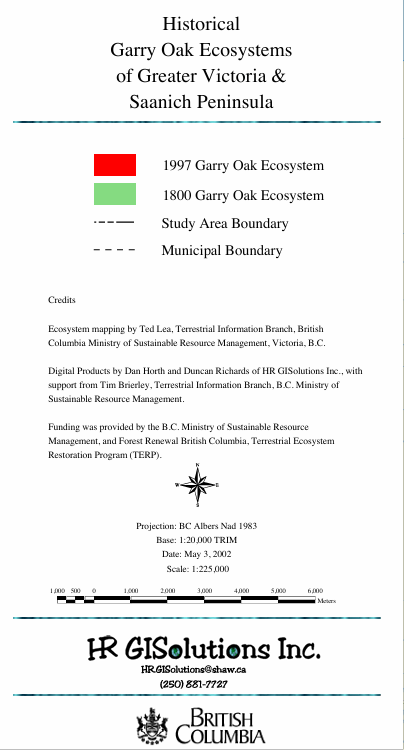
This section of a historical ecological map (credits in reference section at end of article), shows remaining near extinct Garry Oak eco-systems in Cadboro Bay (red). Former Garry Oak eco-system coverage in 1800 is shown in green. I would add that I consider that there are other pockets of Garry Oak eco-systems that aren’t on this map. For example, there is one on the 10 Mile Point side opposite San Juan Island (by Wedgewood Estates). There is also a pocket lower down in the area both in a section of Konuckson park and adjacent to it between Wolsey pl., Phyllis St., and Tudor Ave. There are also pockets elsewhere along the coast.
There is also other Garry Oak eco-system coverage not pictured on the map on the other side of the bay, in the Cadboro Bay side of the Uplands if private properties and their mature Garry Oaks are included. Although some of the eco-systems are not in their prime state, they still exist and are still habitat for many species that are under severe threat by development, particularly being a transference point for migrating birds and their nesting habitat, and also habitat for marine mammals as well, e.g. otters and mink.
The property discussed in this article is the first in the chain of red that can be seen surviving in the green area on 10 mile point, which exists between the junction of Sea View Rd. and Tudor Ave., and ends not far after Bedford Rd. The section exists between Sea View and Tudor. The photo at top is also located within that segment.
A broader excerpt of the map can be seen in the references section at the end of this article.
The full map which covers the Greater Victoria area can be viewed at: VCAN_MAPPING_PROJECT_GOMPS_AGM (The Garry Oak Meadow Preservation Society website).
Full credits and legend for the map can be seen in the references section at the end of this article.
——————————————————————————-
In December of 2024, the beginning of this arc of surviving Garry Oak eco-system appeared under threat as a prominent billboard advertising New Homes Coming Soon! appeared overnight on the bedrock bluff, and the exterior of the old humble single family home above was stripped away.
On December 19, 2024, I wrote the following email to Saanich’s Mayor and Council:
Hello Saanich Mayor and Council,
As you can see from the photos below there is a Garry Oak grove at the junction of Sea View and Tudor, one of the few remaining on Southern Vancouver island, the ecology of which is threatened by ecological destruction from subdivisions.
Do you know if the trees that are tagged in orange tape are going to be removed?
I would like to know what each of you thinks about what is in store for this Garry Oak grove and its sensitive eco-system, which is part of an ecotone in between the seaside eco-system to the forested plateau.
Thank you,
Sasha Izard
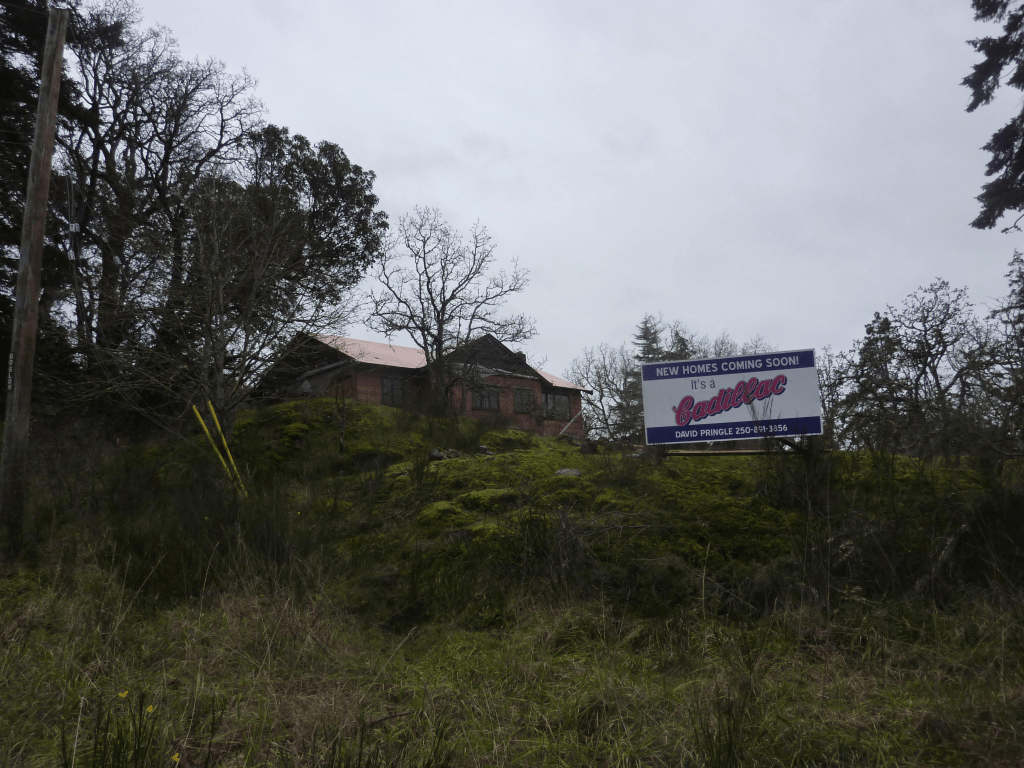
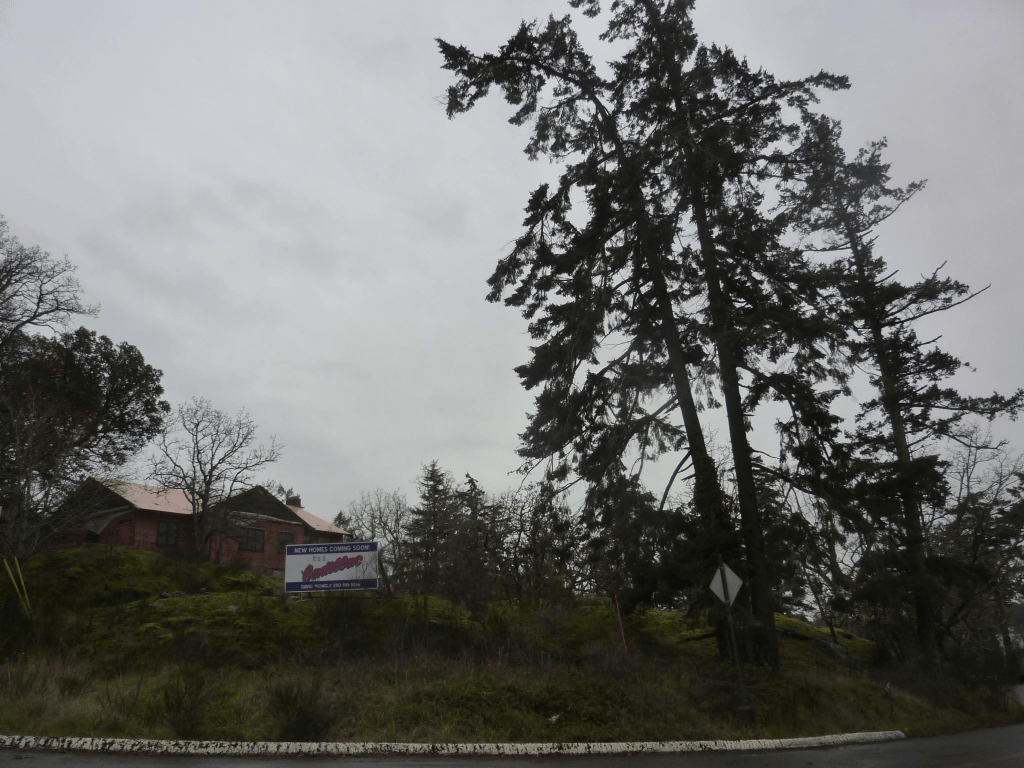
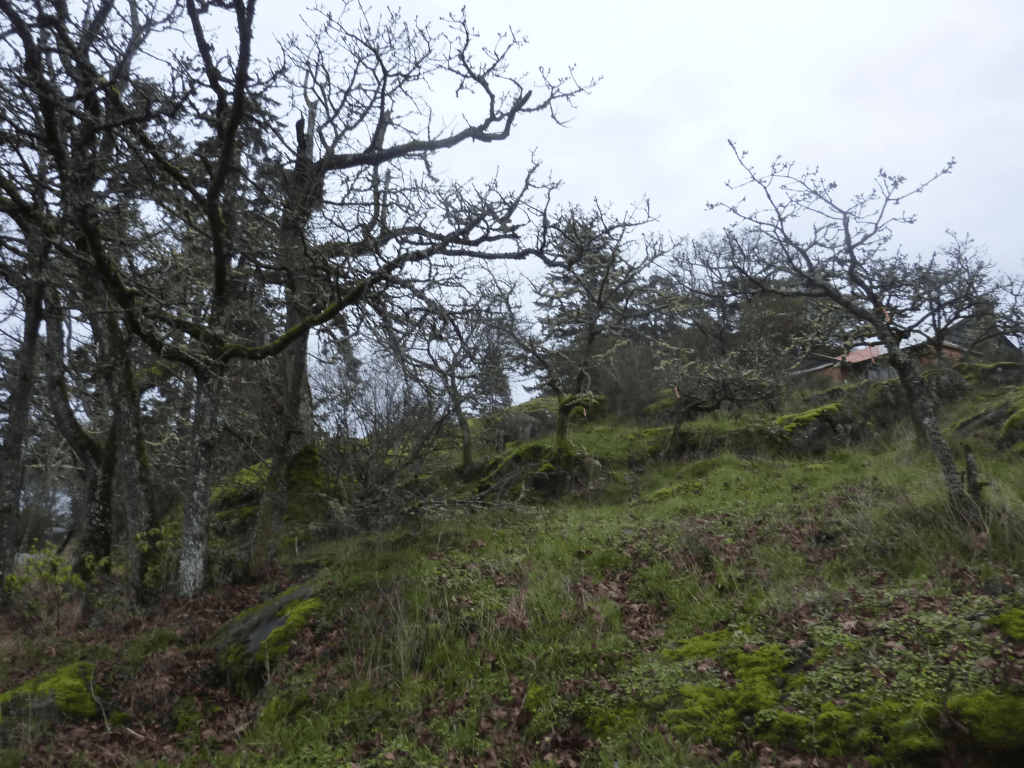
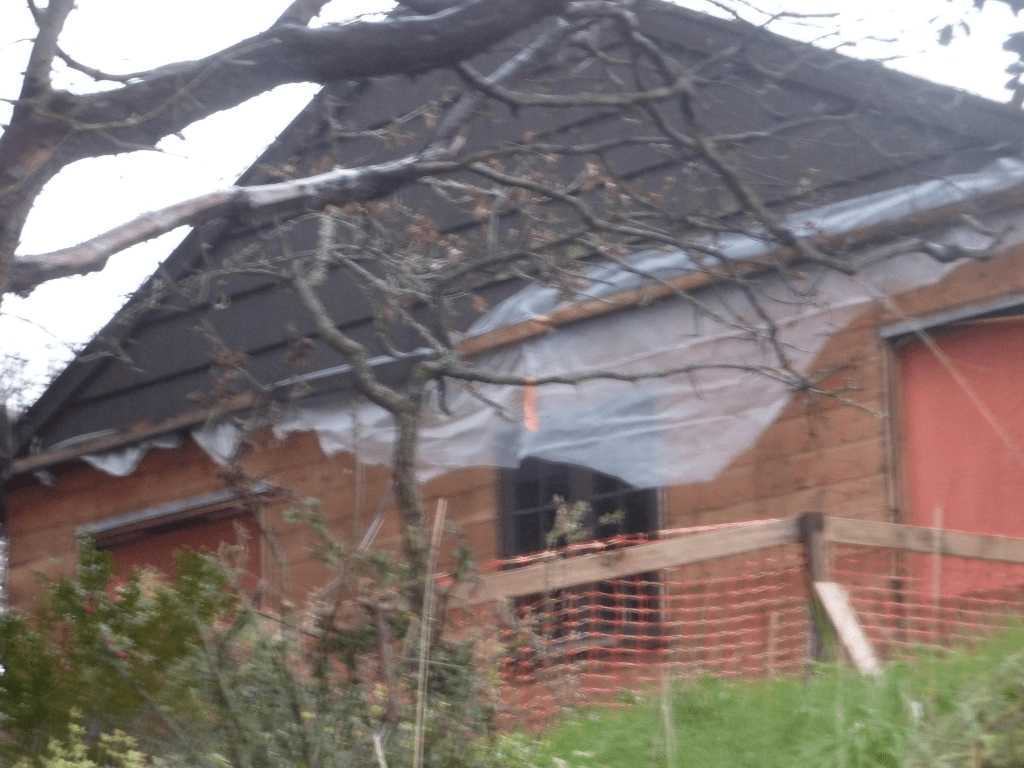
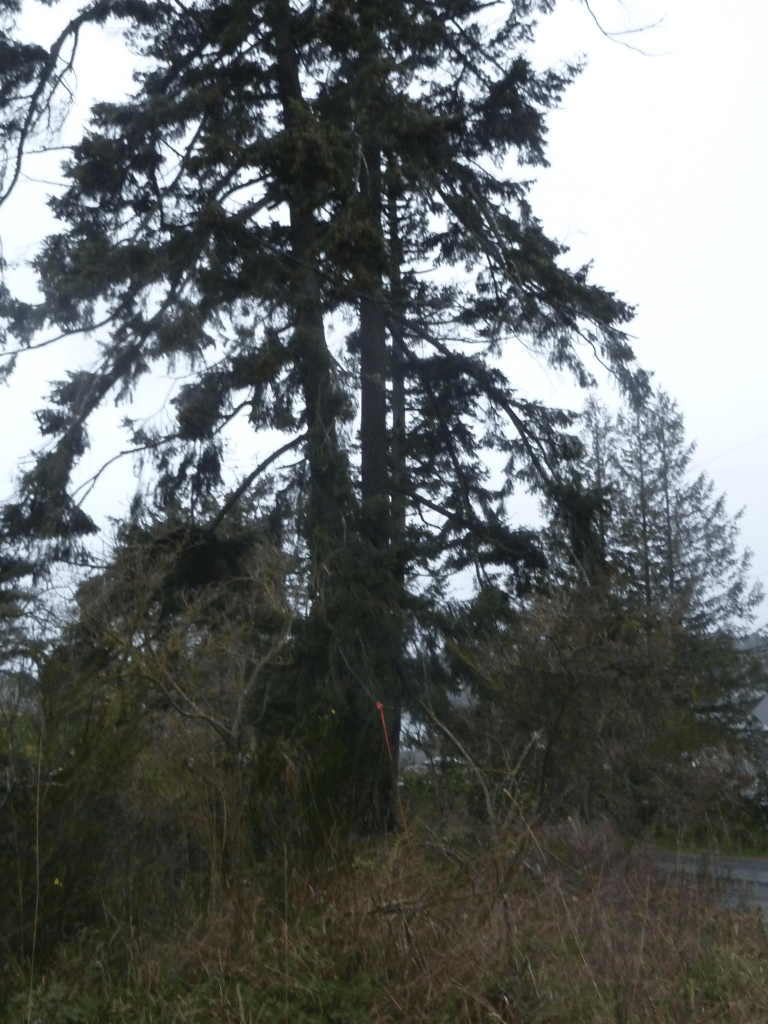
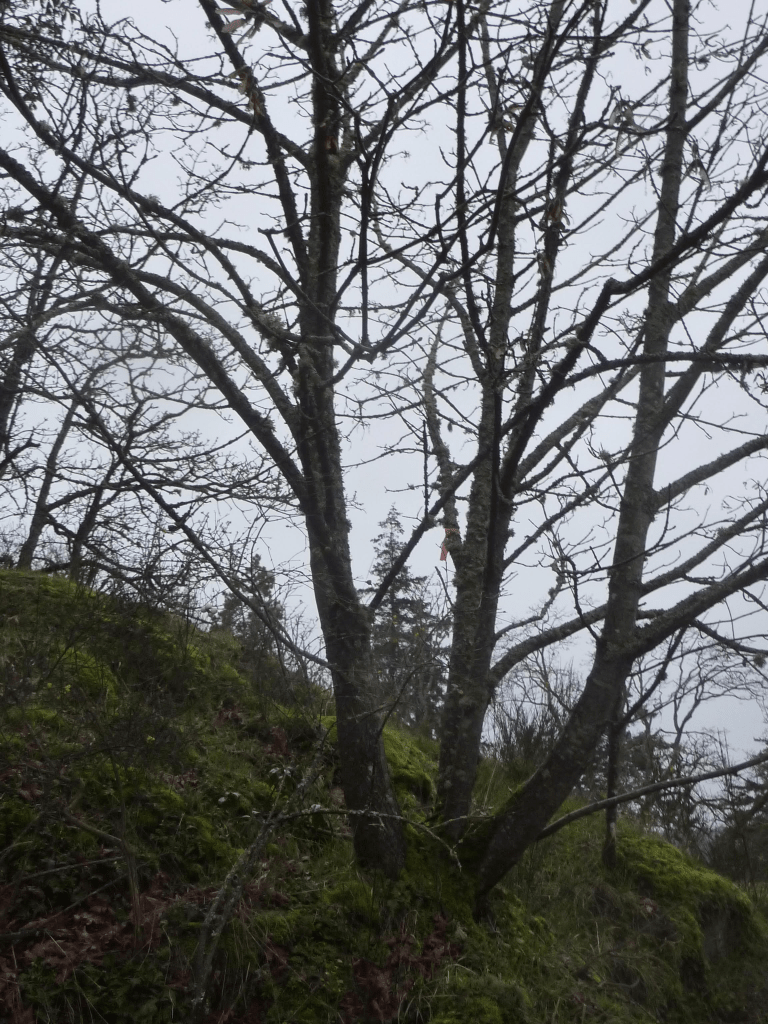
Although my email was to the Mayor and Council (council@saaanich.ca) asking each of them to respond on the issue, none of them had responded by the time Christmas had dawned.
Instead, the Manager, Community Development & Business Systems at Saanich Parks responded for them on Dec 23.
They wrote as follows:
Hello Sasha Izard,
Your email addressed to Mayor and Council dated Dec 19, 2024, was forwarded to Parks for response to address the question you posed regarding potential tree removals at the corner of Seaview and Tudor. I am the manager responsible for the Tree Protection Bylaw and my staff review development applications and apply the Tree Bylaw to those. You asked if the trees on the site that are tagged with orange tape are going to be removed. The quick answer is, not necessarily. Orange flagging tape is used for several reasons on sites, including to demark property lines, and to “tag” or identify trees, instead of small metal tags. These tree numbers correlate to symbols on development plans so staff can review what the impacts might be. While some tree removals can be expected for building construction and servicing, the orange flagging tape’s function is not to mark tree removals.
Sincerely,
——————————————————————————-
In other words, Saanich doesn’t appear to know what is going to happen to the oak grove and to the tagged trees.
I responded:
Hello,
Thank you for your response:
“While some tree removals can be expected for building construction and servicing, the orange flagging tape’s function is not to mark tree removals.”
If as you say the orange flagging tape’s function is not to mark tree removals, then what is the flagging tape being used for here? The tags on the oaks do not appear to be marking a property line.
Did the District of Saanich apply the flagging tape, or did the development company?
Are any of the trees that are tagged in orange (as seen from the photos that I sent to you), Bylaw protected?
As you can see from the following map of Cadboro Bay’s scant remaining Garry Oak eco-systems, this is the beginning of the last belt of Garry Oak eco-system in the bay, and the last on 10 Mile Point as identified by the following map.
Does Saanich know what is going to happen to the Garry Oak grove on the property, or is that subject to the whim of the developer?
Also, do you know how many housing units the developer is planning to add to the property?
Thank you,
Sasha Izard
——————————————————————————-
That it was Saanich Parks that responded (this is a private property not in parks), rather than the Mayor and Council, was interesting. A couple years previously, Saanich’s environmental department was moved under parks’ auspices, and the head of the environmental department resigned, something that I don’t recall ever seeing mentioned in the press.
In 2016, I had cleared of invasive Scotch Broom for the owner, a 4-acre property adjacent to Konukson Park on 10 Mile Point. Most of the property is covered by Garry Oak eco-system. What then took place shocked me: the property had 34 native arbutus trees removed from it by Saanich Parks, which subsequently had them replaced with 34 Christmas-tree-like Serbian Spruces that Parks had grown in a greenhouse.
I called up Saanich’s chief biologist at the time, who also, could not understand the sense behind this by the District. They directed me to the recently hired head of Saanich Parks at the time. I then called them up and asked them about why 34 native arbutuses were removed and replaced by non-native Serbian spruces.
Regardless, of whether I agreed with it, I understood at least the principle behind removing the arbutuses, which were suffering from a contagious blight that kill such trees, and which Parks feared would spread into the park. What I couldn’t understand is why the these indigenous trees were replaced with non-indigenous Serbian spruces. The head of parks at the time did not seem to understand why this was an issue, and asked me to explain this to them. I explained how species co-evolve over many millennia, and form symbiotic relationships, which is why it is crucial to preserve native ecology, so that naturally evolved biodiversity is not lost. I was informed that if I have a problem with the approach taken to talk to my Councillors.
Now 10 years later there is a different Council albeit with a number of the same incumbents, and with the natural environment continuing to degrade, so far none of them have even responded to this issue when emailed.
Parks’ latest response has been as vague as ever, and I am under no confidence that Parks is able to protect the remaining Garry Oak eco-systems on private properties, which are in imminent threat of destruction at the hands of the development industry.
——————————————————————————-
The property directly across the street from the one focussed on in this article on Sea View Rd., had about a dozen arbutuses removed only a few years ago, which opened up a vast hole in the urban forest canopy as seen from Cadboro Bay beach, after it had been purchased by a new owner and the old house was torn down; and a vastly expanded footprint for the new house and parking lot that replaced it was added. That property currently has a for sale sign on it.
A similar story happened several lots down from there, perhaps a decade ago about a dozen mature trees were removed for a new build, which was sold again not long after.
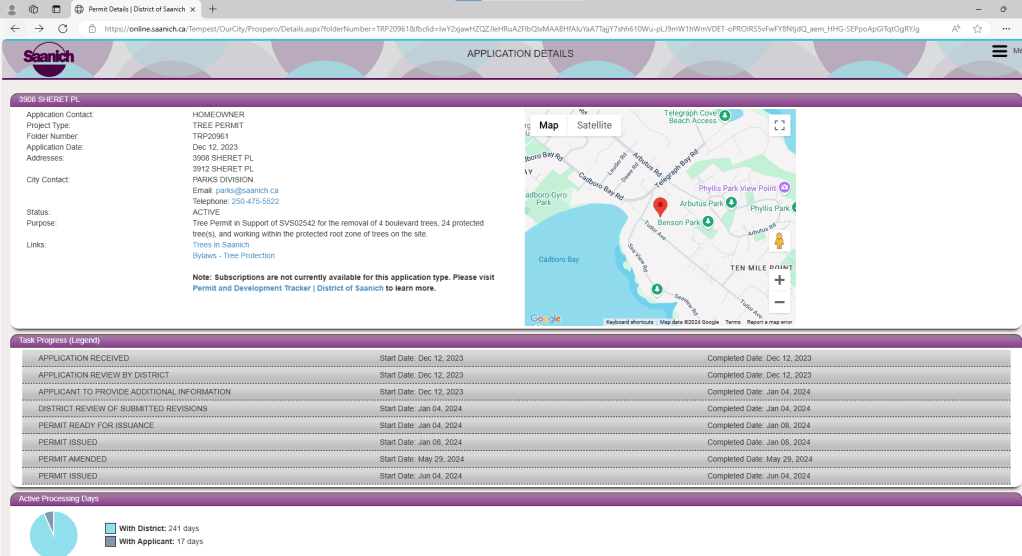
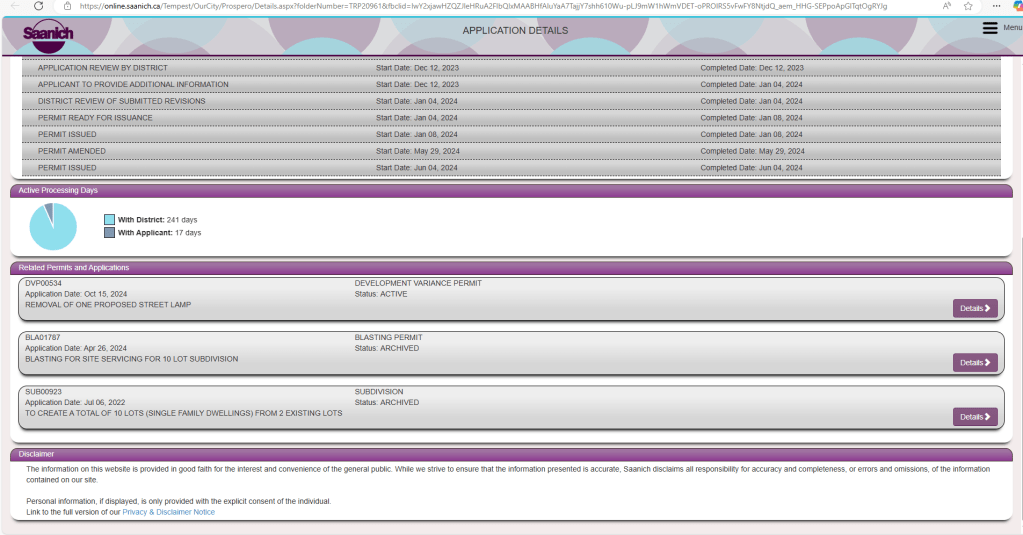
Only a block up from this area, a major multi-unit development on Sheret Pl., saw Saanich approve the removal of 4 boulevard trees, and 24 protected trees, in addition to allow blasting and the creation of 10 units, where formerly stood 2 single family homes. (See Reference section at the end).
Such a pattern will inevitably lead to eco-systems collapsing on the Point, as a new artificial blueprint replaces and entropies it. A similar pattern has been unfolding in the nearby Queenswood/Telegraph Bay area.
For some developers and consultants: oak trees, and their protection (when it is in place) and on the occasion they don’t get their way with the landscape, are a frustrating obstacle for development. See: One more obstacle to building more houses in BC: root balls | iNhome
——————————————————————————-
The property in question, in this article, has at least one blue tag that I have observed on a mature Garry Oak, which would indicate at least that it could be protected, but in reality the Garry Oak protections are so weak in Saanich, that even that could go if it falls within the so-called ‘building envelope‘ and/or the developer gets approval from Council.
Even if that one oak, or a few other mature Garry Oaks are left, one or a few oaks do not make a Garry Oak eco-system. It has not been unusual for oaks to be spared from development, only to have their root systems, so sequestered and damaged by it, that the oak will not survive.
A Garry Oak eco-system is not only the oaks, although they are a keystone species. Many species live within the area, whether it is a meadow, or rocky bluffs, or even human intervened garden area.
Have you ever wondered where the bumblebees go during the winter? Many are hibernating under beds of moss in the meadow, or between a layer of moss and bedrock beneath. Oak leaves are naturally acidic, and promote a mossy environment. Strip that layer away, blast, or bulldoze it, and the bumblebees are gone. There go some of the most important pollinators that play a key role in keeping the eco-system going.
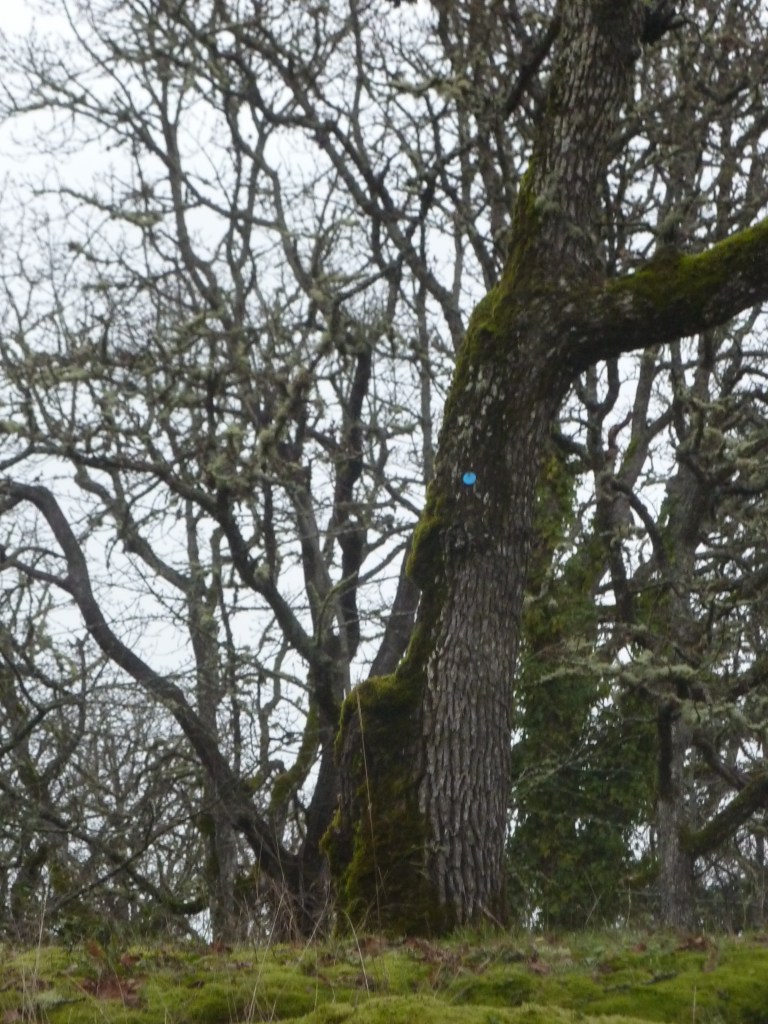
At least one Garry Oak could be spotted on the property with a blue tag indicating that if lucky, it might be spared the effects of development.
——————————————————————————-
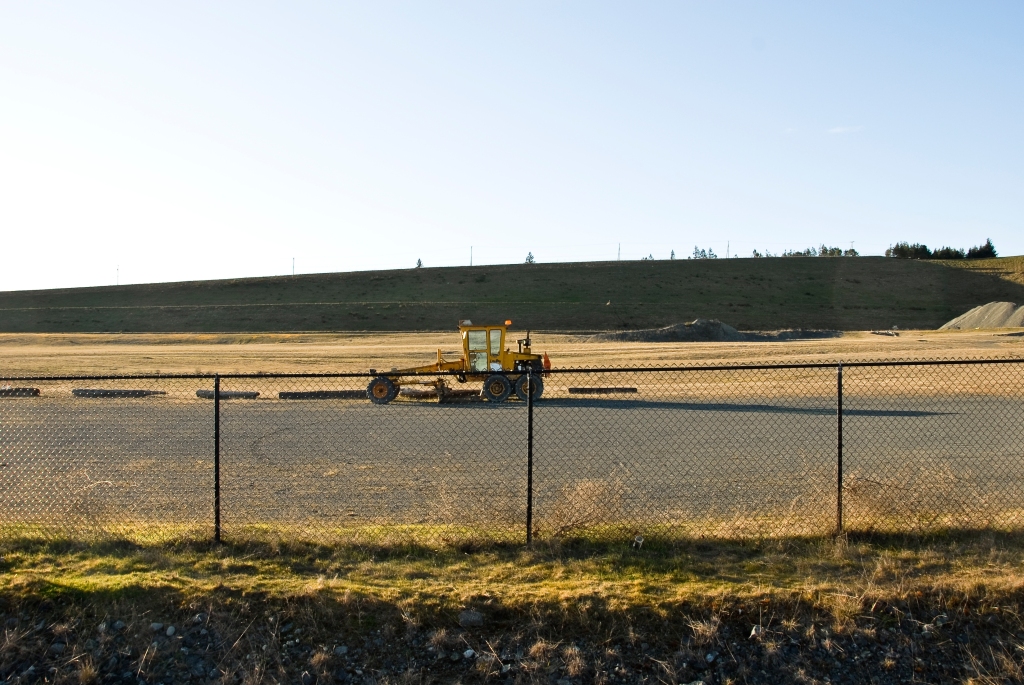
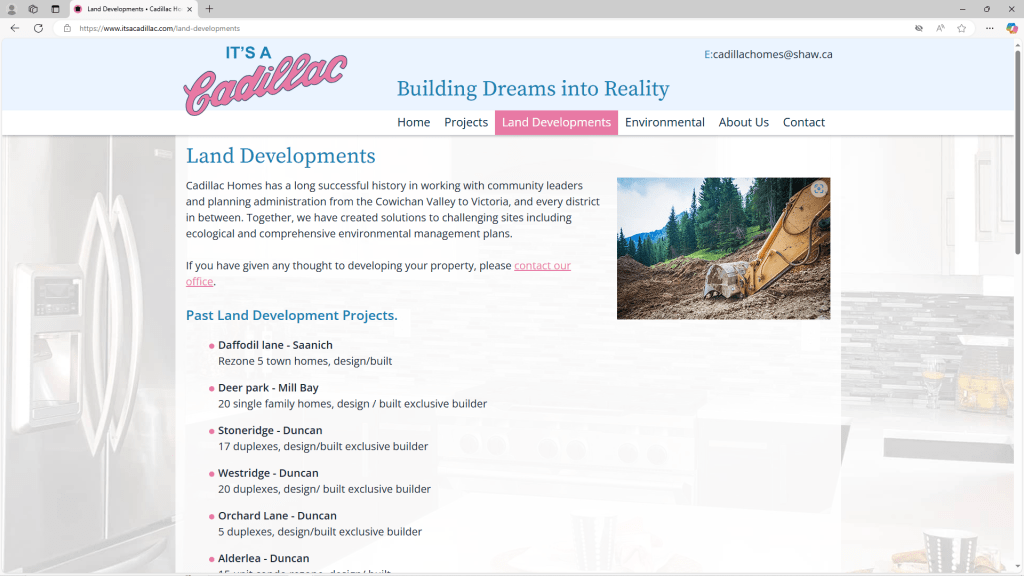
I haven’t found much solace from the development company’s website however. Its page on “Land Developments”, looks a bit too ironic, as it begins “Building Dreams into Reality”, and states: “Together we have created solutions to challenging sites including ecological and comprehensive environmental management plans”, right next to a picture of a bulldozer that has been tearing up the top soil in a natural area. If I move my cursor over the image, the following text appears: “excavator diggin with trees and mountain”.
——————————————————————————-
Conclusion:
By continuously removing the native eco-systems for deregulated development and manifold increased density without public hearings by edict, is the Province and the municipality building dreams for the future, or are they creating an end-game nightmare for the numerous other species that inhabited and depend on this area, where a once flourishing eco-system had once created a paradise?
The pattern is clear. Rather than putting a damper on it, or even trying to reverse the process of environmental degradation, as is crucially needed; the government appears to have put an accelerator on the process in the interests of temporary industry profit. They will justify this while screaming housing crisis, but the housing units going in are not affordable, and the biodiversity crisis ever critical and dire, is made far worse.
Without the reversal of Bill 44, and effective environmental protections being put into place, as fast as possible, and with no signs indicating that to be the case, inevitably, the unfolding nightmare of the development industry’s end-game on the environment on Southern Vancouver Island, will be ours to witness.
——————————————————————————-
References:
Lea, T. 2006. Historical Garry Oak Ecosystems of Vancouver Island,
British Columbia, pre-European Contact to the Present. Davidsonia
17(2):34–50
Credits and Legend to the map is below:
garryoak.info/uploads/1/1/4/9/114971855/vcan_mapping_project_gomps_agm.pdf
Garry Oak Meadow Preservation Society (GOMPS) – Home
Saanich permit information on Saanich’s website regarding Sheret Pl. and the approved removal of 24 protected trees (Accessed: Dec 25, 2024):
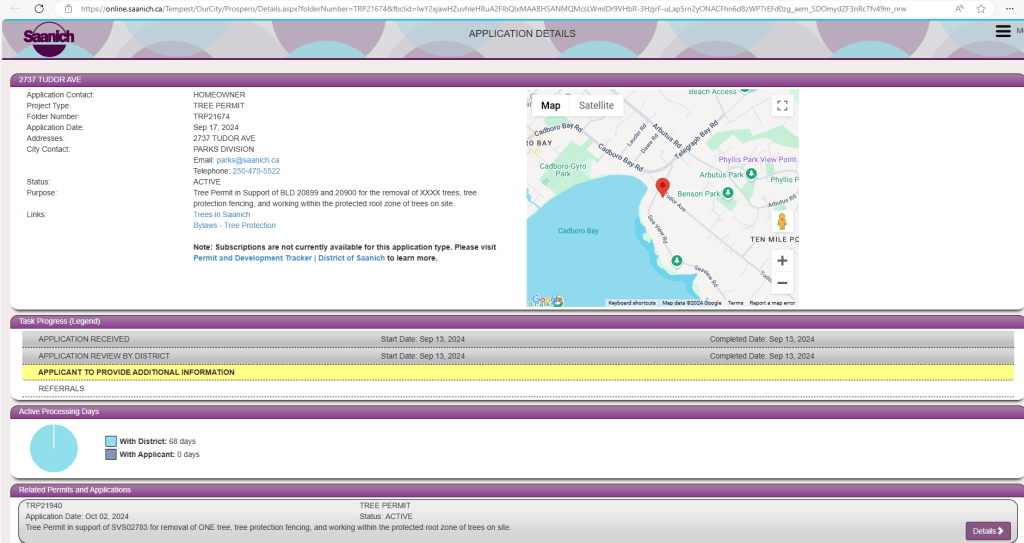
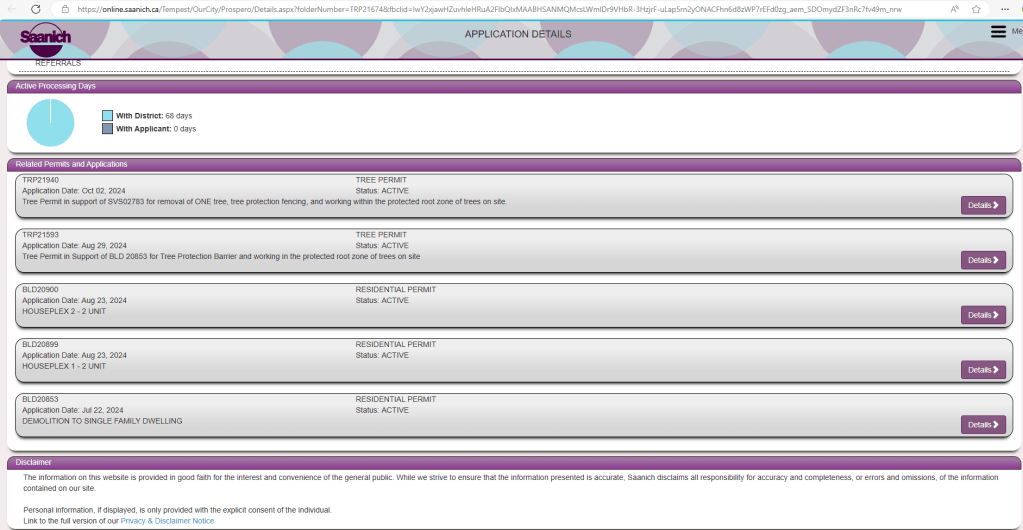
Saanich permit information on the Saanich website (Accessed: Dec 25, 2024) regarding 2737 Tudor Ave (the property in question).
The founder of Cadillac Homes Cam Pringle is currently serving on Saanich’s HOUSING AFFORDABLE STANDING COMMITTEE. There is no evidence that the homes being proposed for this lot are to be affordable.
HASC Dec 2 REVISED 2 Agenda.pdf
One more obstacle to building more houses in BC: root balls | iNhome
—————————————————————————————————
See also: “Trees can be managed, but they cannot be controlled. The only way to eliminate all risk is to eliminate all trees.” – Arborist Disclosure Statement to multiple municipalities. – CRD Watch Homepage
Index of CRD Watch articles concerning the environment/ecology. – CRD Watch Homepage


 CRD Watch Homepage
Leave a reply to jenusdesign Cancel reply