Arthur McInnis
March 24, 2026
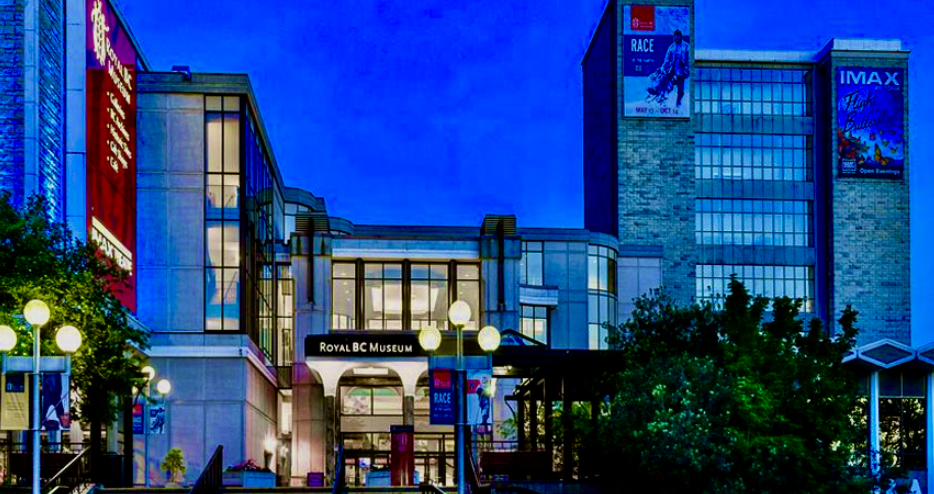
When the Royal BC Museum concluded its so-called “international search” for a new CEO in March 2026, the result landed not in the offices of some globally recruited cultural heavyweight, but in the Mayor’s living room. The board’s choice was Allison Bond, a 35-year provincial career bureaucrat, former Deputy Minister of Social Development, and spouse of Victoria Mayor Marianne Alto. For anyone watching how this city is governed, it is a remarkable appointment, and not in a flattering way.
Compare Bond’s résumé against those of her counterparts at peer institutions and the contrast is jarring. Nicholas R. Bell, recently appointed CEO of the Royal Ontario Museum, spent over two decades in senior museum roles at the Glenbow, the Mystic Seaport, and the Smithsonian. Caroline Dromaguet at the Canadian Museum of History spent more than 20 years inside the museum sector before taking the top job. Meaghan Patterson, who leads the Royal Alberta Museum, the RBCM’s closest provincial equivalent, worked exclusively in museums for over two decades, including seven years running the Alberta Museums Association. None of these institutions would have considered a candidate whose career is, without exception, rooted in provincial social work and poverty reduction. Victoria’s museum board did.
Managing a Museum, or Managing a Crisis?
To be fair, the board was not entirely without a rationale. Chair Stan Chung stated publicly that Bond was selected for her ability to comprehend “the dynamics of change within complex public organizations” and to build trust-based relationships, particularly with First Nations communities, given her background as a former Assistant Deputy Minister of Aboriginal Affairs. The RBCM is in genuine difficulty. It carries unresolved allegations of systemic racism, the contentious closure of the First Peoples Gallery, and a massive provincial infrastructure build in the new PARC Campus collections facility.
What this reveals, though, is not a hiring success but an admission. The BC government is treating the Royal BC Museum not as a cultural institution in need of artistic leadership, but as a fractured government agency requiring a veteran insider to manage a procurement pipeline and contain a public relations problem. The museum’s mandate as a place of heritage and scholarship appears to have come second to its function as a vehicle for provincial capital spending.
When the Boundaries Dissolve
There is a structural problem here that goes beyond any single appointment. A capital city’s government functions properly because tension exists between City Hall and the Provincial Legislature. They are meant to have competing interests; that friction is not a flaw in the system, it is the system. When the Mayor of Victoria and the CEO of the city’s largest provincial crown cultural corporation share a home, those necessary boundaries disappear.
The risk is not corruption in the crude sense. The risk is something subtler and in some ways harder to address. That is, an ideological echo chamber in which preferred municipal and provincial policies, shaped in this case by a shared background in social welfare administration, are never subjected to the adversarial scrutiny that healthy governance requires. Multi-million-dollar public portfolios managed through domestic consensus rather than rigorous public debate is not good government. It is rather a private arrangement dressed in public clothing.
An Election Year Question
Voters go to the polls in October, and the RBCM appointment arrives at a telling moment. Mayor Alto has recently repositioned herself on homelessness, declaring the city “at capacity” and announcing that Victoria has “done enough.” It is a significant rhetorical shift from an administration that has overseen years of social infrastructure spending and resultant strain in residential neighbourhoods. Whether that shift reflects genuine reconsideration or election-year recalibration is a legitimate question.
—————————————————————————————————
See also:
Ebycrats by Arthur McInnis – CRD Watch Homepage
Mayor Alto’s Proximity Problem with a Ward Crusade vs. Her Own Place of Residence, by Arthur McInnis – CRD Watch Homepage
Marianne Alto and the Problem of Apparatchik Governance in Victoria, by Arthur McInnis – CRD Watch Homepage
Alto Takes Stand on Tax Fairness by Arthur Mcinnes – CRD Watch Homepage
The Crystal Pool’s $140 Million Gap that Inflation Cannot Explain, by Arthur McInnis – CRD Watch Homepage
How the Development and Real Estate Lobby Pressed Mandatory Housing Targets, Mass Upzoning, Captured Official Community Plans, and Made the Shutting Down of Public Hearings the Norm in British Columbia Under the NDP Government – CRD Watch Homepage

 CRD Watch Homepage
Leave a comment