No Playgrounds at Bayview Place – A Community’s Dilemma: A Toxic Tale by Arthur McInnis
Arthur McInnes
Aug 23, 2025
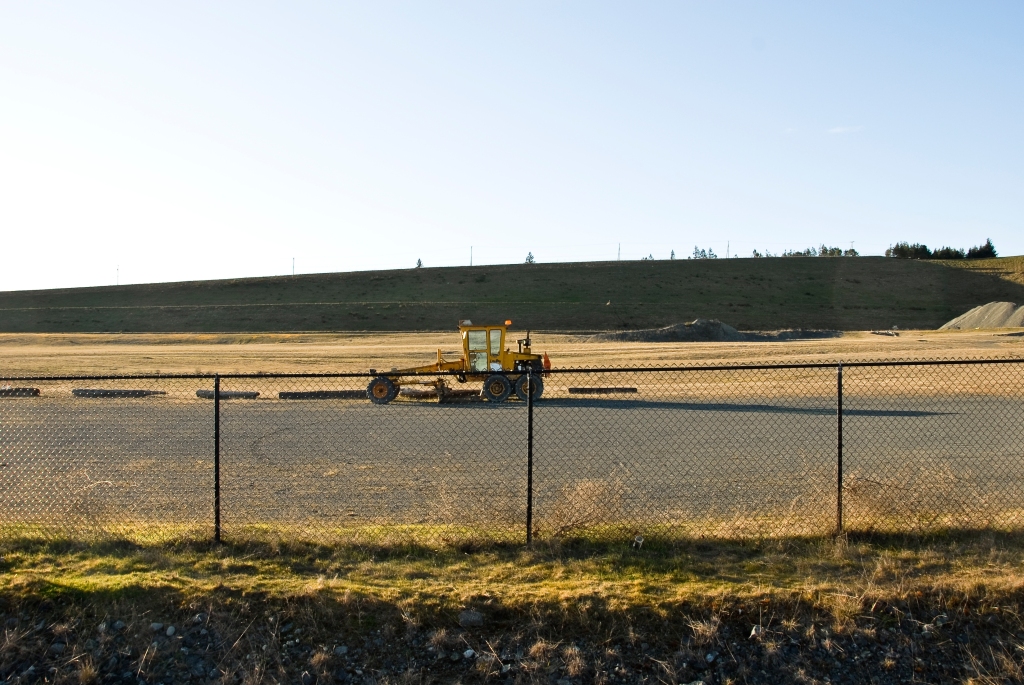
Imagine a community excited about a new development bringing 1,800 homes to their neighbourhood, only to discover that children living there won’t have a playground where they can play. This is the reality at Bayview Place, the site of the E & N Rail Roundhouse and National Historic Site. It stems from decisions made regarding the environmental cleanup process by Focus Equities.
Ken Mariash prides himself on taking on brownfield sites:
- “I look at brownfields and I see opportunity and that opportunity outweighs the negative,” said Ken Mariash of Bayview Developments… The rail yard…contains hydrocarbons from the rail tracks and from underground storage tanks. As well, there are heavy metal contaminates associated with shop activities. “We have done tougher projects.” Jean Sorenson, Rebirth is on track at contaminated railyard in Victoria, British Columbia, Journal of Commerce (ConstructConnect), December 16, 2009.
- “These sites can be very complicated,” said Mariash. “They have old factories on them, they are contaminated, they don’t have services or road access.” Richard Watts, Developer’s vision coming to fruition at Bayview Place, Times Colonist, November 12, 2017
Taking them on though involves choices. For instance, will the site have a children’s’ playground or not?
That was the question Marg Gardner asked at the Public Hearing of Greg Chamberlain, a Senior Associate and Team Lead for Design and Community Development at Stantec, an engineering firm that has worked for Ken Mariash for decades.
- Councillor Gardner: Is there going to be any place where a kid can kick a ball with this? Like a six-year-old, I don’t talk about a team. Is there any place, green space, flat space kind of for a kid to pay catch?
- Greg Chamberlain: Yeah, so through the site reclamation of the contaminated soil, the way the regulations work is that through the reclamation standard that we’re complying to the ground surface cannot be used for playgrounds. That does not mean that you can’t have children running around on the plaza and so on. So that’s just dedicated space for playgrounds. The intent is that the rooftops on podiums might support outdoor play and certainly that would be the case for the daycare and be a secured outdoor play area for them. But to kick around the ball, the primary objective would be to utilize the surrounding green space across the street on the west park.
So, given the Bayview site was contaminated, Focus Equities faced a crucial decision. Under British Columbia’s Contaminated Sites Regulation (CSR), different cleanup standards exist for different land uses. Listening to Mr Chamberlain, Focus Equities and Ken Mariash appear to have chosen to remediate the land to the High-Density Residential standard (RLHD) – a choice that will have lasting consequences for future residents.
What the RLHD Standard Means
The RLHD standard creates an interesting paradox: it allows for building homes where families with children might live but assumes these children will primarily play indoors. This standard explicitly forbids ground-level playgrounds, sports fields, or picnic areas – places where children might have frequent direct contact with soil.
Under this standard, developers can build hard-surfaced plazas, paved courtyards, and add landscaping. Children can occasionally use these spaces, but dedicated play areas at ground level are prohibited by the environmental regulations.
For a playground to be permitted, the soil would need to meet stricter standards: either Residential Low-Density (RLLD), which assumes children play in yards and gardens, or Urban Park (PL), designed for sports fields, playgrounds, and picnic areas.
Why the Developer Chose RLHD
From Focus Equities’ perspective, the choice makes financial sense. Meeting the RLHD standard is significantly less expensive and less complex than achieving the stricter RLLD or PL standards. The cleanup thresholds for contaminants such as lead, arsenic, and hydrocarbons are less demanding under RLHD, allowing more soil to remain in place or be capped rather than removed. Maybe this is the fudge that gets past off-site removal to “dig and bury”? How many times has this been heard though it seems less dig and bury and more “bait and switch”.
The regulations also supported this approach, as CSR rules permit developers to apply the RLHD standard consistently across an entire site when building apartments, condominiums, and commercial spaces.
The Result at Bayview
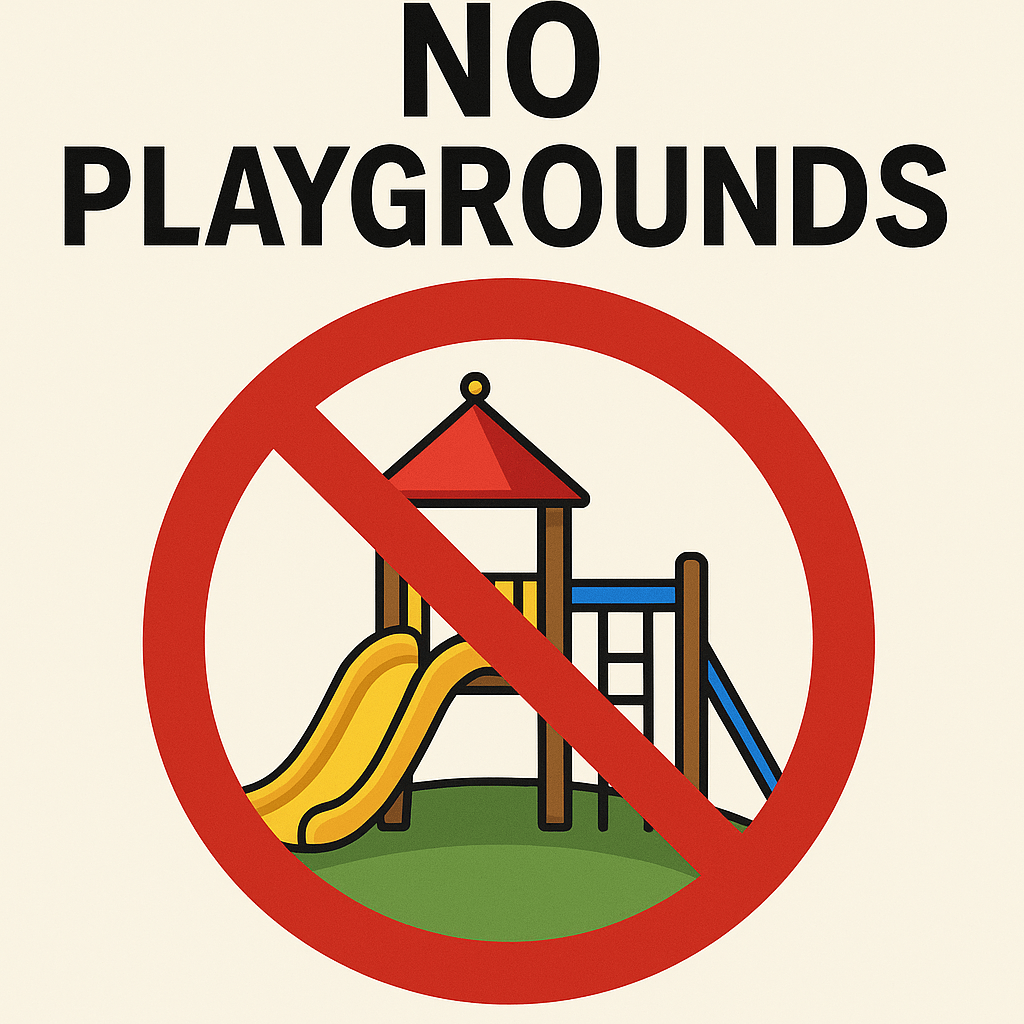
The consequences of this decision are now clear. Despite creating a community of approximately 1,800 homes, Bayview will have no ground-level playgrounds. Families who move in will need to use plazas or visit off-site parks for outdoor play space.
This outcome was perfectly legal because Focus Equities presumably never included a playground or child-focused area in its plans. No promises were broken – but an opportunity for creating a more child-friendly community was missed.
Could It Have Been Different?
The situation was not inevitable. The CSR provides flexibility, allowing the Ministry of Environment’s Director to apply different standards to different parts of a site. With this approach, the majority of the development (the towers and commercial areas) could have remained under the RLHD standard, while specific areas designated for a playground, daycare yard, or community garden could have been remediated to the stricter RLLD or PL standards.
This would have required additional cleanup costs for those specific areas but would have created valuable amenities for residents.
Answers Are Called For
As we reflect and fume over the Bayview situation, and the Council’s complicity in it, there are questions that can no longer be deferred. Bayview Place is not a boutique infill project. It is one of the largest redevelopments in the City of Victoria, with some 1,800 residential units planned. Families will live here. Children will grow up here. Yet it now seems though, we have learned through the developer’s own consultant, that the entire site is being remediated under the Residential–High Density (RLHD) standard, a standard that by definition prohibits playgrounds, sports fields, or any other child-intensive ground uses. This should never have been accepted as a fait accompli.
The central question is why this was allowed? Why was at least a portion of such a large residential site not required to be remediated to a standard that allows child-friendly uses? Why did Council not insiste, during rezoning and OCP amendment proceedings, the remediation standard would accommodate playgrounds and other family amenities? What correspondence or briefing notes were provided to Council regarding this limitation, and if none, why not?
Looking forward, the issue is not confined to Bayview and is relevant throughout the Capital Regional Disrict. Should large residential redevelopments be required, as a matter of policy, to consider the needs of families and children at the remediation planning stage? Could the Victoria City Council have required, through restrictive covenants or development permit conditions, that at least one playground area be remediated to the more protective Residential–Low Density (RLLD) or Park (PL) standard? Was the City Council’s willingness to accept an RLHD standard across the board a case of prioritising developer convenience and cost-savings over the long-term liveability of the community?
Council cannot continue to look the other way. Residents are entitled to a full and public explanation. Was the choice of remediation standard reviewed and accepted by the City Council in the 18 months the Council went dark between the second and third readings of the OCP Amendment bylaw, or left entirely to the Ministry of Environment and the developer? Does the City Council acknowledge that the present approach forecloses playgrounds and similar child-friendly uses on the site? Will not only Victoria City Council commit to ensuring that future large-scale residential developments incorporate, at minimum, one remediated area suitable for playgrounds or similar high-contact family uses but will other municipalities as well? This is not just a question of environmental standards. It is a question of liveability, family-friendly planning, and a Council’s duty of care to its residents. Bayview demonstrates how early technical decisions hiding in plain sight and overlooked by a Council can and will have profound impacts on community quality of life for decades to come. Oust the Mayor of Victoria and her Coalition of Five at the Next Election.

 CRD Watch Homepage
Leave a comment