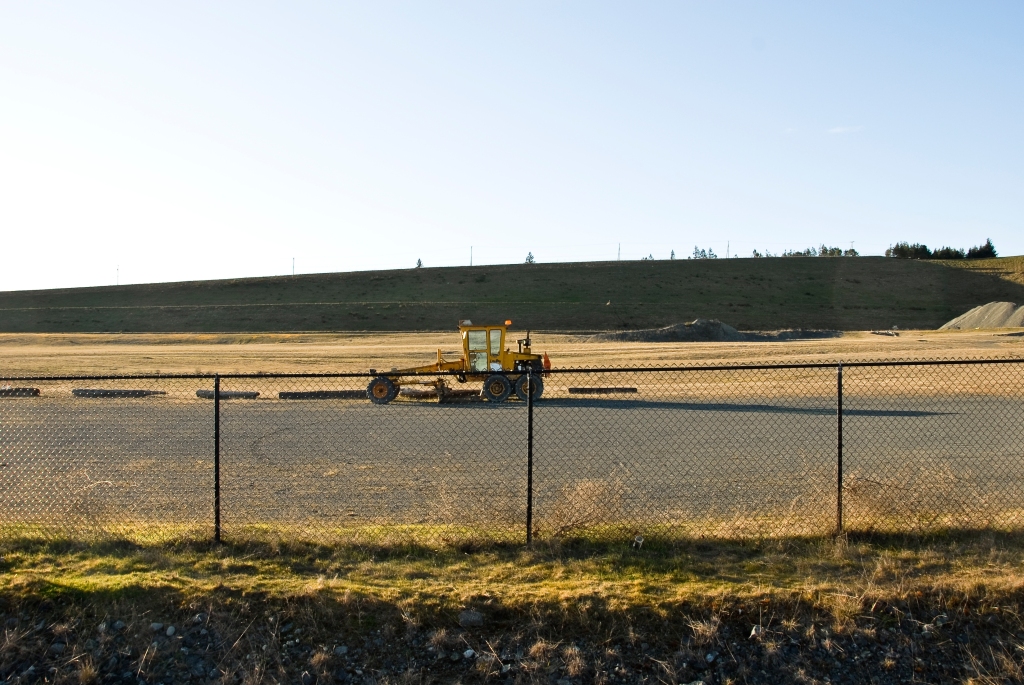
The Urban Development Institute lobbied the Province of BC to implement what they called “Global Housing Targets”.
The Province would deliver new Housing Bills in response.
By Sasha Izard
Feb 23, 2025
The Urban Development Institute (UDI) lobbied the Province of BC for many years to adopt housing targets for municipalities, and the Province complied, with UDI member company Urban Systems through its subsidiary Urban Matters receiving a virtual monopoly on creating Housing Needs Reports/Assessments across much of the Province.
Thus Urban Matters was getting paid with public funds to dictate in many cases to municipalities how many units they would have to build; their numbers being required by law through Official Community Plan (OCP) conformance, if the municipalities receiving them were beholden to a Regional Growth Strategy, as many of them are.
This however was not enough for the UDI. In addition, the UDI lobbied the Province for enforceable housing targets, and offered a carrot and stick approach of both incentives and punishments to municipalities that don’t comply with them.
Also simply delivering the housing necessary to Canadians, and actually solving the affordability crisis wasn’t the priority, instead the UDI moved to undermine that. They lobbied the Province to downgrade the definition of affordability to “below market”, thus if they had their way, even housing labeled affordable wouldn’t be affordable.

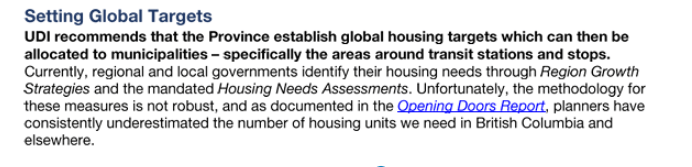
Less concerned with actually solving the affordability crisis, the UDI also sought to undermine it a different way. The UDI lobbied the Provincial government for what what they called “Global Housing Targets”. Instead of making targets that would solve core housing needs within Canada, the UDI sought to base municipal housing targets on global demand, which of course would stimulate already overheated demand, rather than cool it off, thus keeping housing price high. At least the UDI didn’t offer a pretext that this would lead to affordability, they simply presented it as something the government should do naturally, because well the UDI says so, and they usually get their way with the Province right?
What the UDI was trying to compel the Province to do is what they used to claim on their old UDI Capital Region website before they pulled it and their members directory down in November of 2023 that they are committed to delivering “steady growth”:
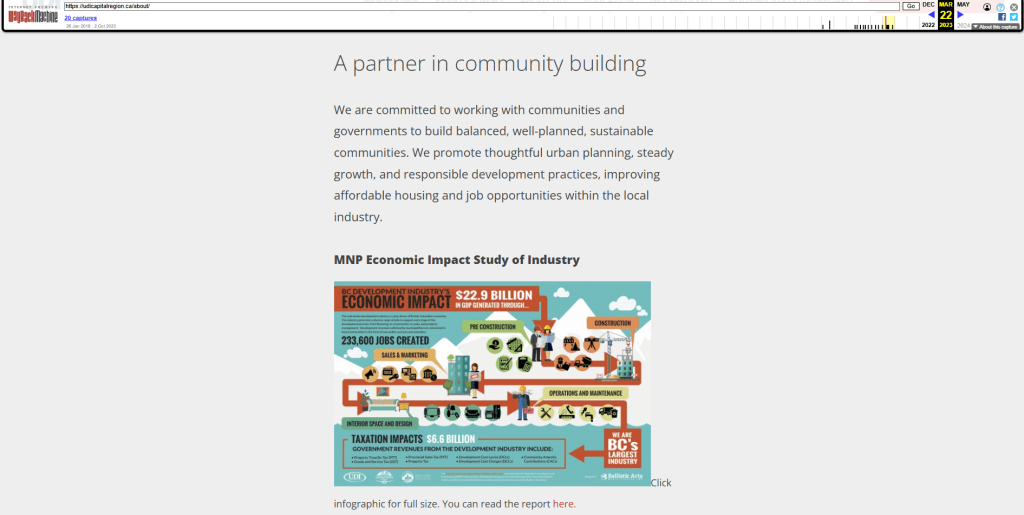
Who We Are – UDI Capital Region
So what does the UDI’s Global Housing Targets for the Province to adopt look like?
The following are lobbying letters and a presentation obtained by Freedom of Information that reveals their vision of Provincially enforced growth for local governments at all costs:
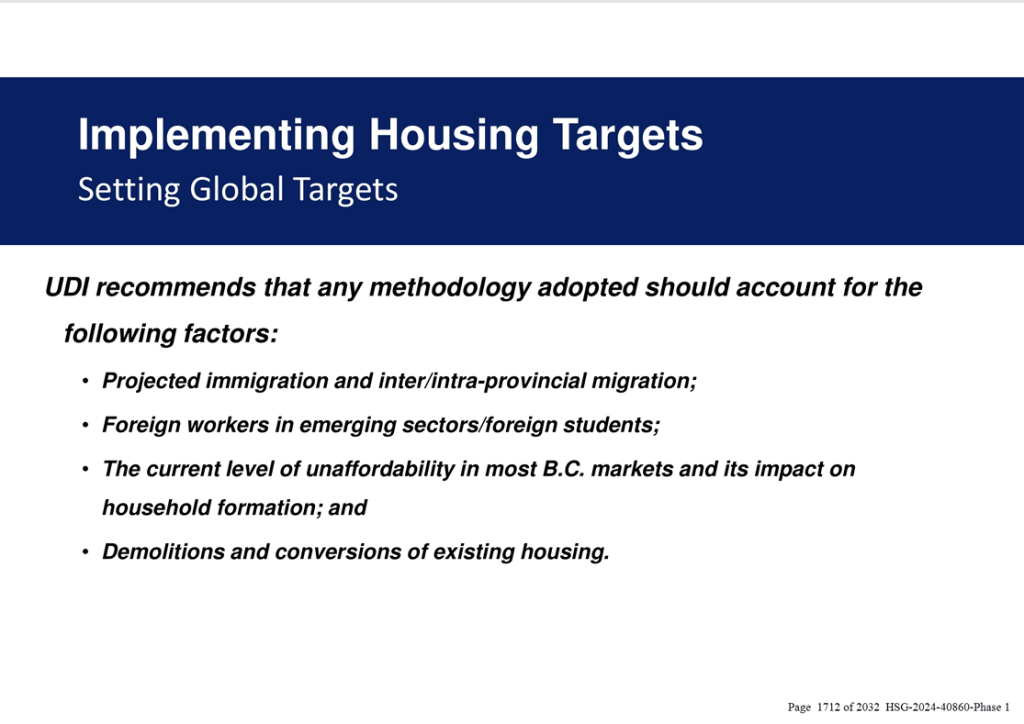
(Slide that the UDI provided to David Eby, when he was the Attorney General and Minister Responsible for Housing in March 2022.)
The following 3 pages are from a UDI lobbying letter that accompanied the above presentation to Eby on March 10, 2022:
docs.openinfo.gov.bc.ca/Response_Package_MMA-2024-40862.pdf (pages 317-319)
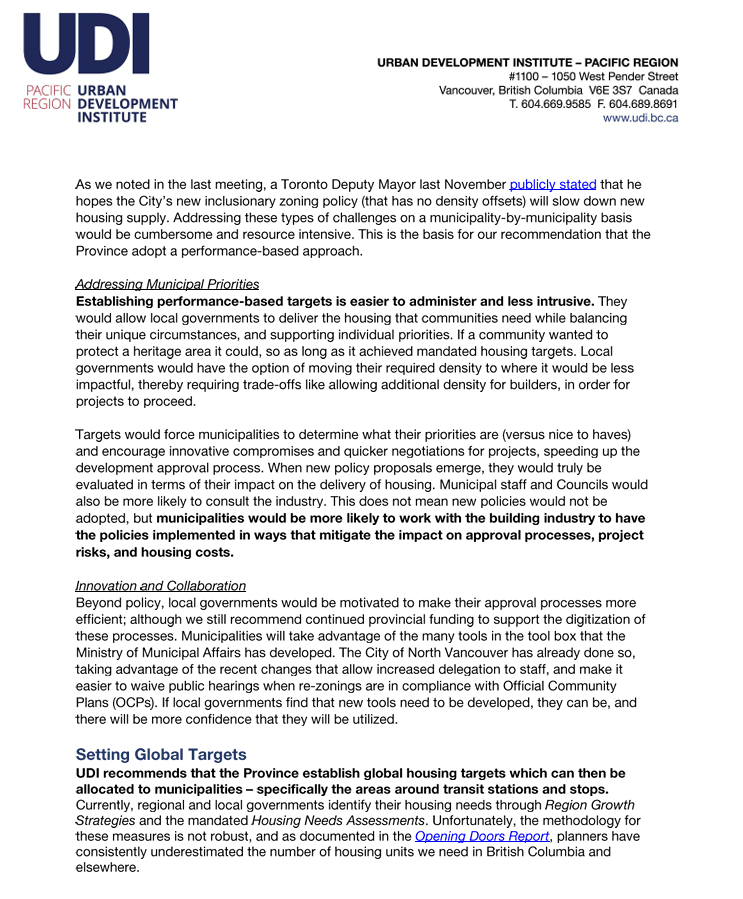
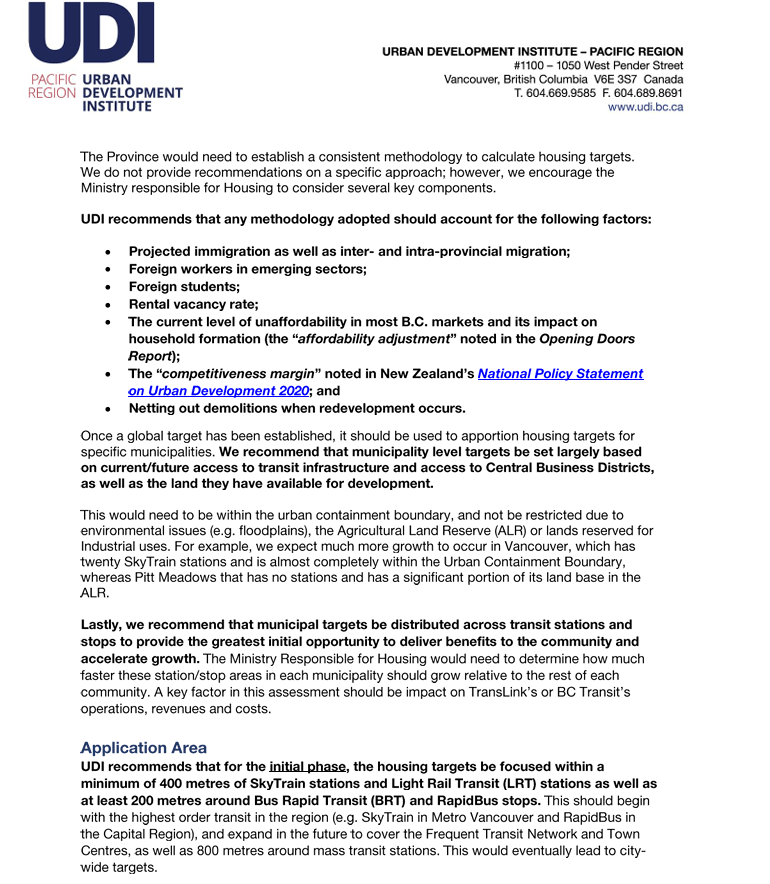
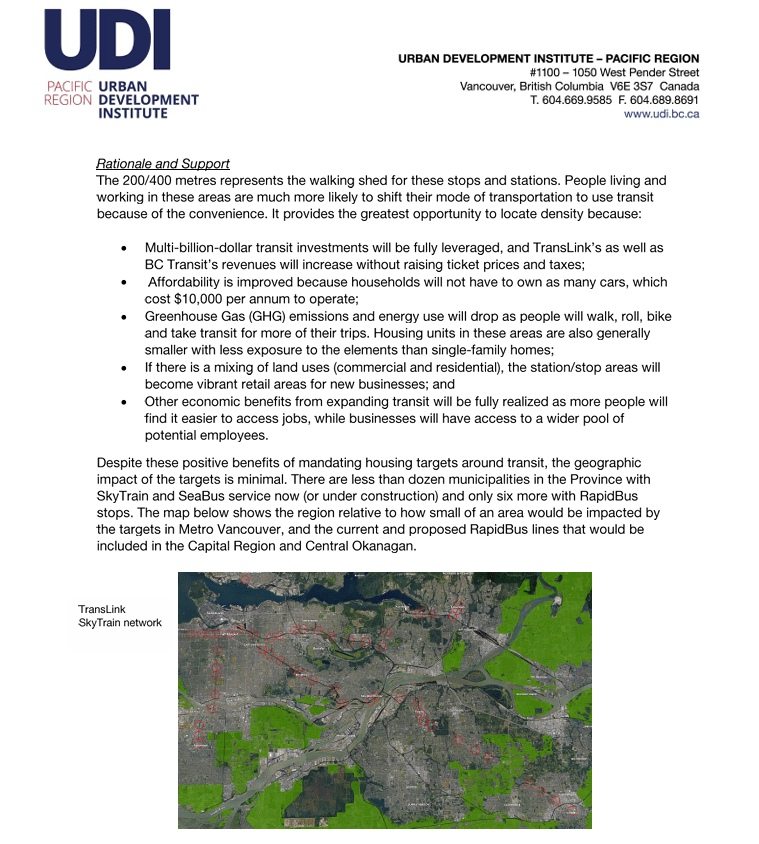
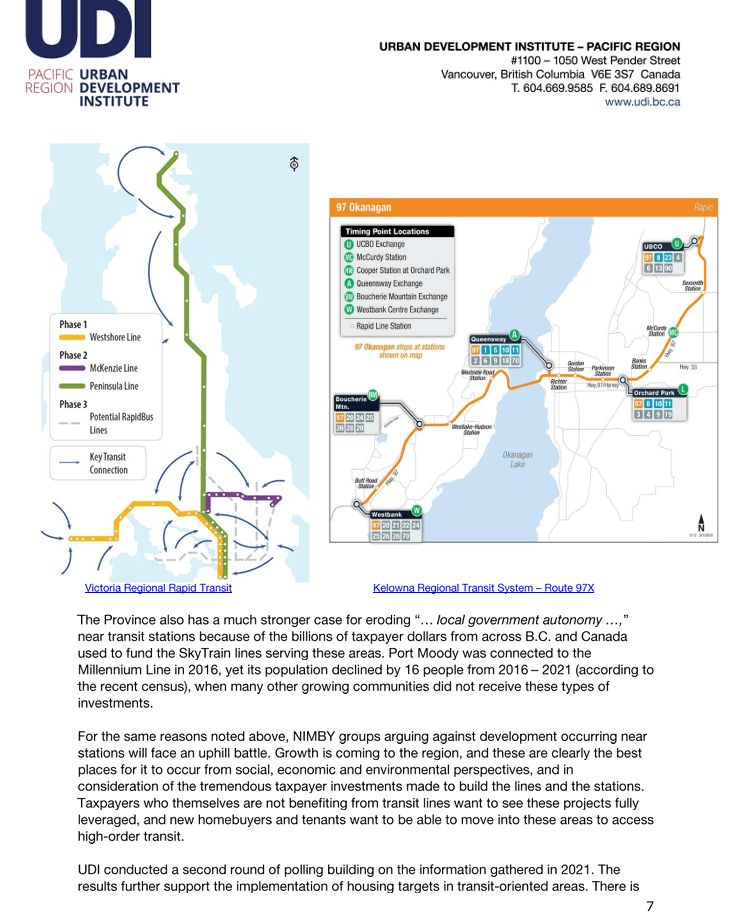
The conclusion of the letter:
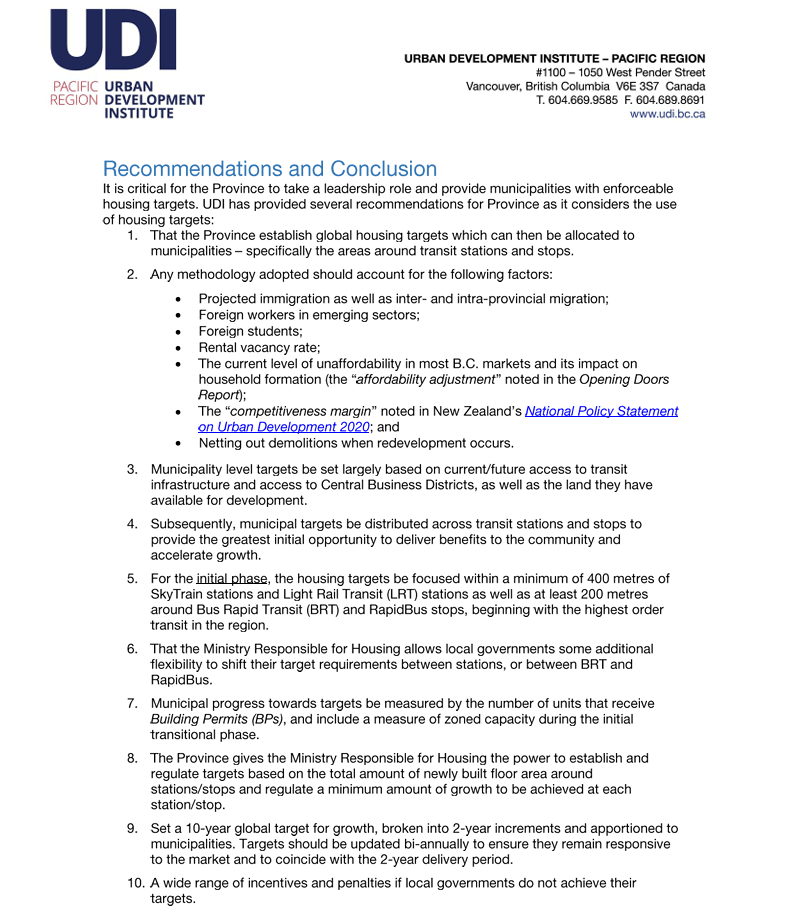
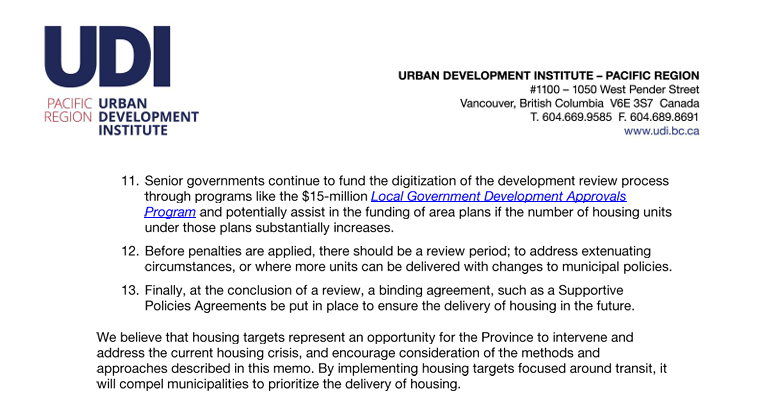
If the UDI’s conclusion looks remarkably like Bill 47 (and Bills 44 and 43 for that matter), well don’t be too surprised.
A brief look at UDI member TransLink and BC Bill 47 (2023)
The UDI also lobbied that the Province establish “growth projections” for British Columbia and its regions, which could then be used to establish growth projections for municipal Housing Needs Reports and housing targets.”
Let’s not kid ourselves. The conflation of “growth targets” with “housing needs”, is the sort of warping of goal posts that the UDI specializes in, and which the Province and local governments and other levels of government go along with, while entirely lacking in critical inquiry.
While this tactic can maximize profits, it will not lead to housing affordability, which raises the question again, why did the UDI want the Province to downgrade the definition of affordability to below market? After all, 1% below market is by definition below market, but it does not make something affordable.
What then does the UDI’s lobbied-for definition of affordability become, but a lowering of the bar for government funding of development, and itself an advertisement of doublethink, get this affordable housing (that is not actually affordable) aka missing middle housing cue BC Builds to step in. Supply has always been the priority over affordability.
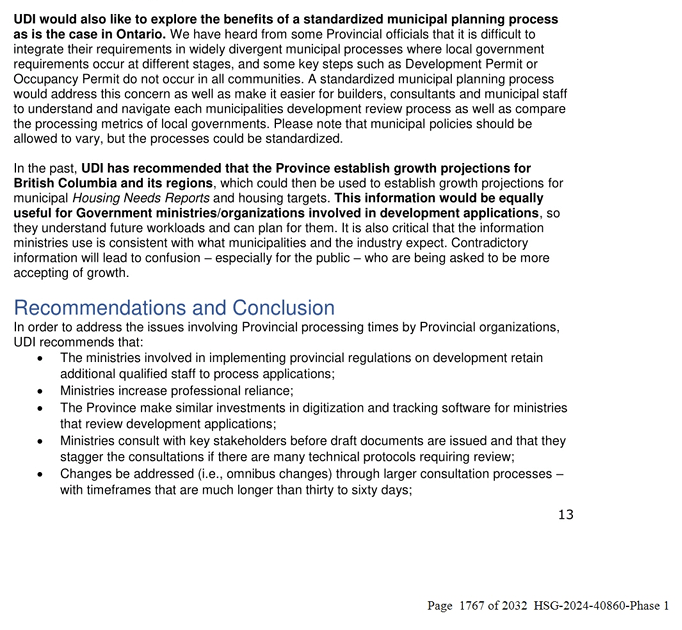
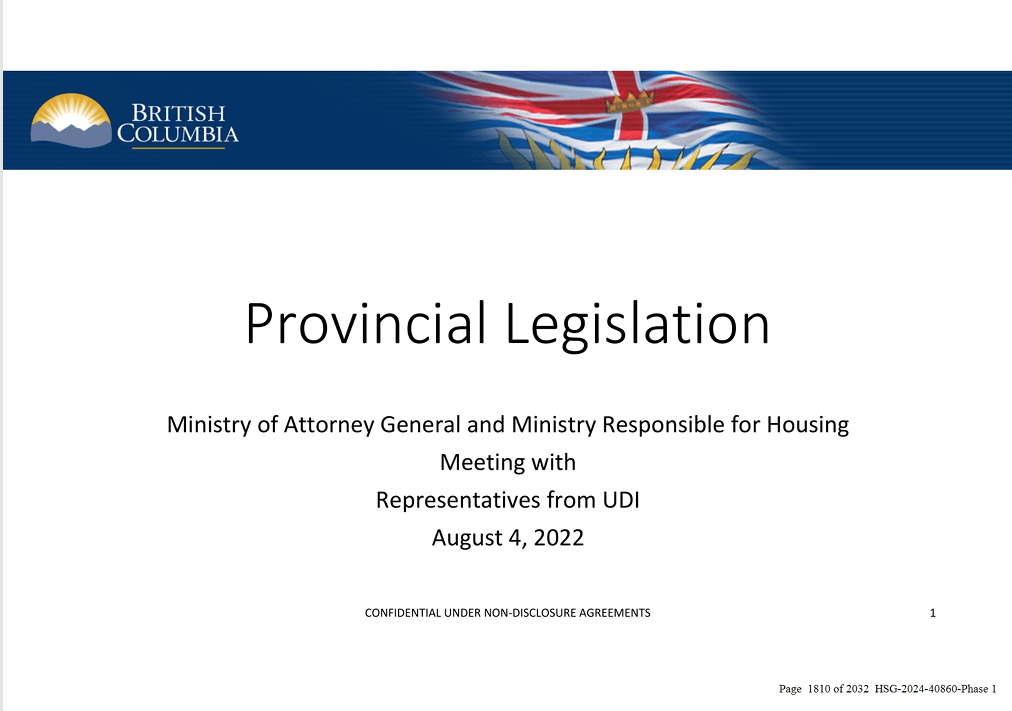
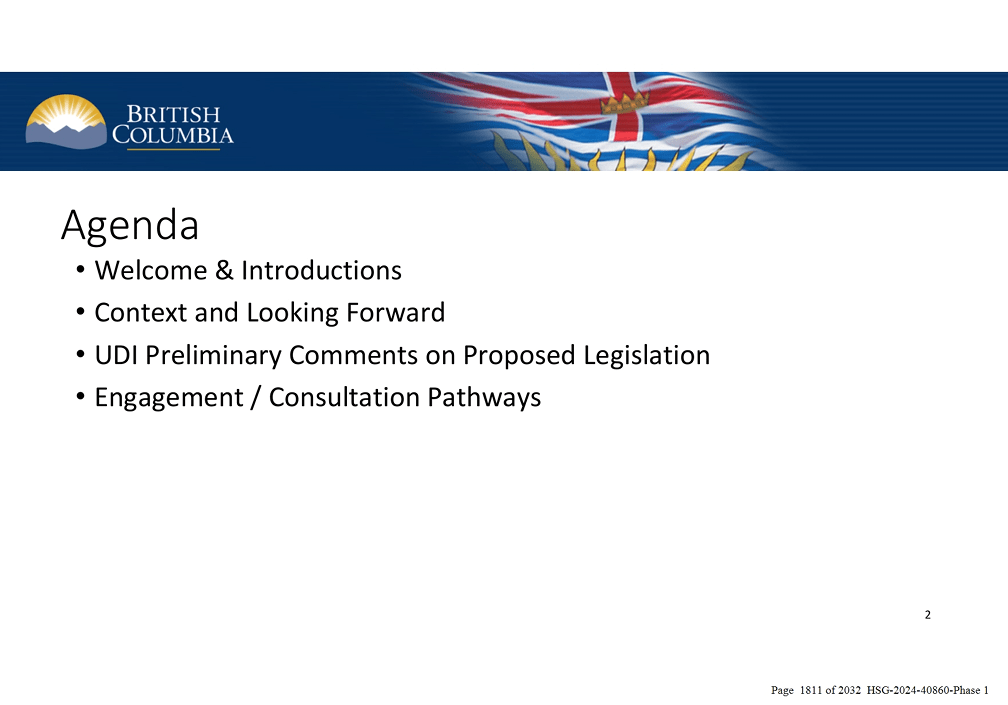
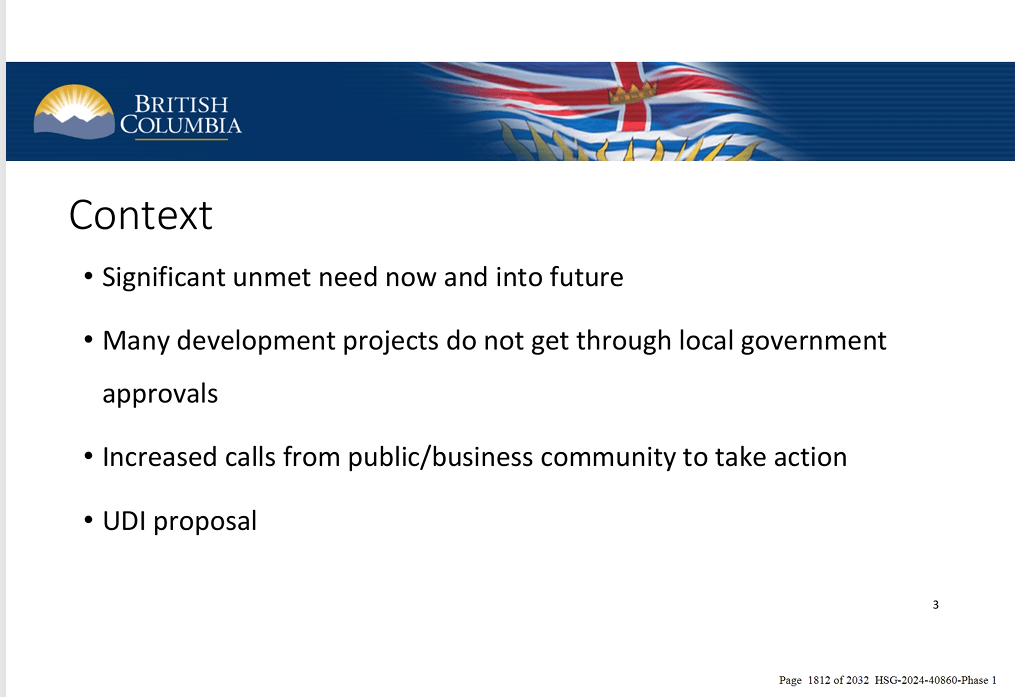
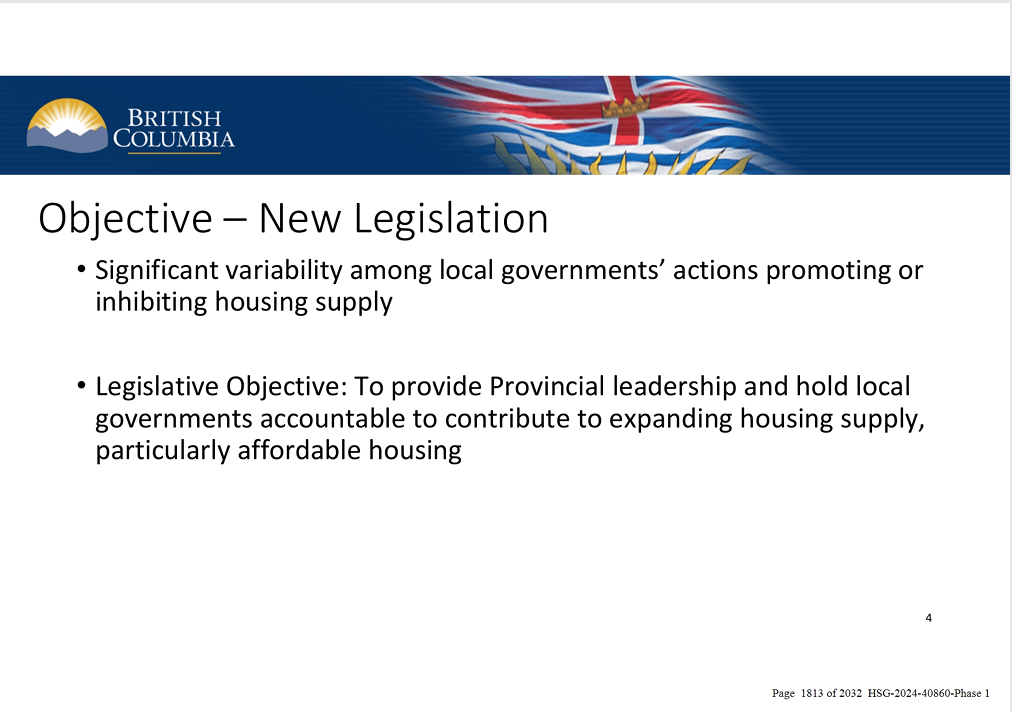
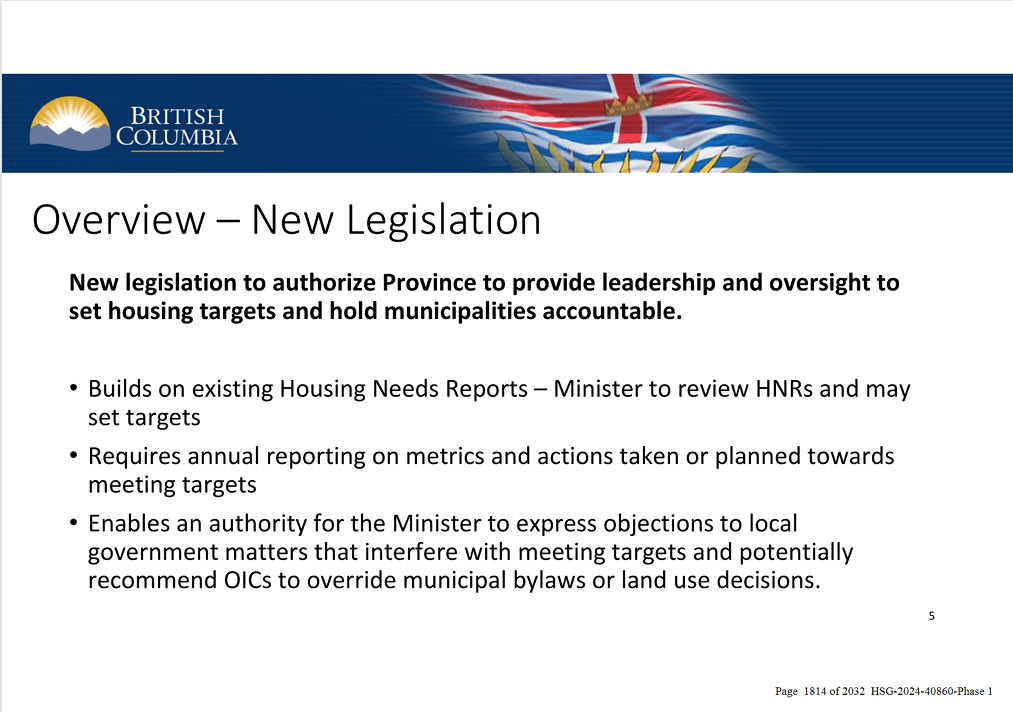
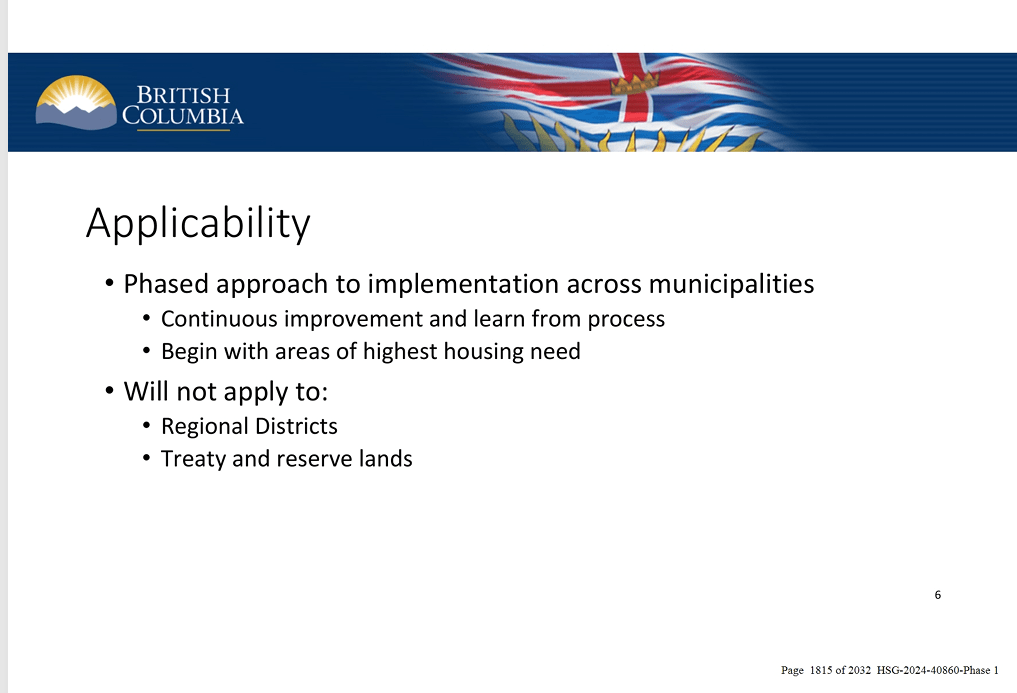
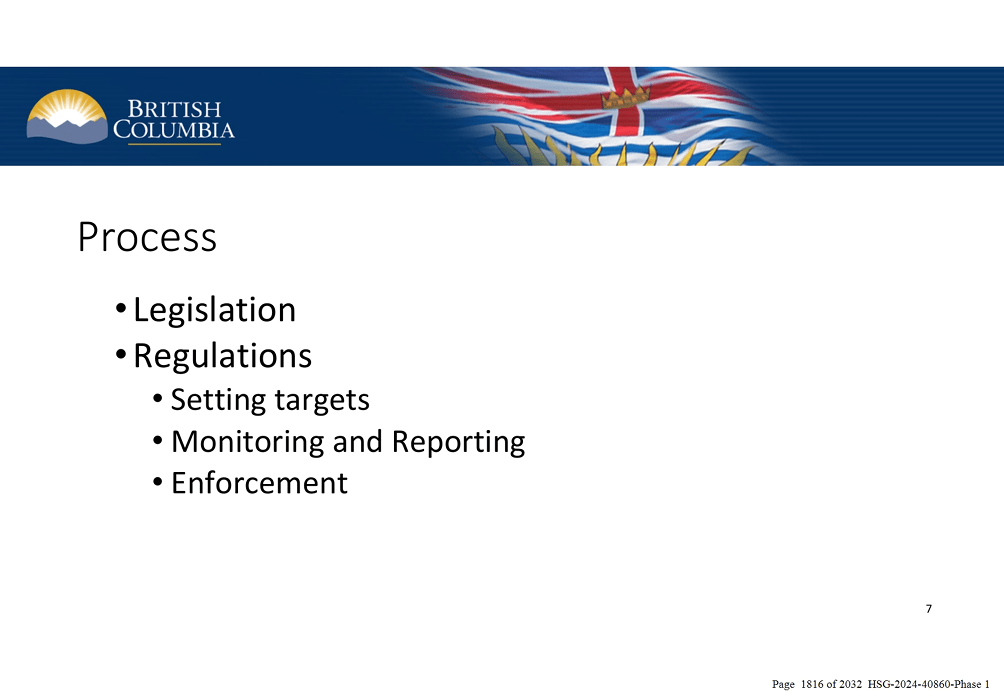
A year after the UDI’s lobbying presentation and letter to David Eby where they introduced the idea of “global targets”, the new housing Bills (43-47) delivering on the UDI’s demands were on their way to becoming a reality/implemented with the following being prepared by the government in conjunction with their UDI advisors:

 CRD Watch Homepage
Leave a comment